

Date: August 13, 2025
In the rapidly evolving confectionery sector, sugar reduction has shifted from a niche health-driven trend into a mainstream innovation battlefield. While soft candies, chocolates, and baked goods have benefited from decades of sugar substitute research, hard candy remains one of the most technically challenging formats for sugar reduction. The reasons are rooted in its chemistry: hard candy's hallmark glassy texture, snap, and shine are all dependent on sucrose's unique functional properties under high heat.
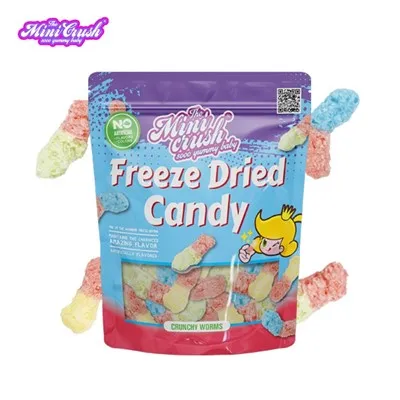
MiniCrush-a China-based freeze-dried candy factory known internationally for its playful textures and functional snacks - is now applying cutting-edge sugar science to tackle this challenge head-on. By combining Allulose and Isomalt, the company has developed a formulation that not only cuts sugar but also retains the iconic "glass" aesthetic consumers expect from premium hard candy.

The Core Challenge: Why Hard Candy Is the Last Frontier in Sugar Reduction
Hard candy is essentially a supersaturated sugar glass. Traditional recipes rely on sucrose heated to around 150°C (300°F), where it melts, caramelizes, and cools into a transparent, brittle structure. The critical functionalities of sucrose in hard candy include:
Caramelization for Color & Flavor-Sucrose develops golden hues and subtle toffee notes under heat.
Structural Rigidity-The crystalline-to-amorphous transformation during cooling locks the candy into a solid, glassy state.
Surface Gloss & Transparency-Requires precise control of supersaturation and cooling speed.
When you replace sucrose with alternative sweeteners, you face a trifecta of problems:
Insufficient Browning: Some sugar alcohols and high-intensity sweeteners do not caramelize.
Texture Collapse: Without the right glass transition properties, candies turn sticky or cloudy.
Thermal Sensitivity: Many alternatives degrade or crystallize unpredictably under high heat.

Allulose: Clean Sweetness with Browning Potential
Allulose (D-psicose) is a rare sugar that has only ~0.4 kcal/g-about 90% fewer calories than sucrose-but behaves remarkably like sugar in cooking. It dissolves easily, has a clean, sucrose-like sweetness, and, most importantly, it participates in Maillard and caramelization reactions.
Key advantages of allulose in hard candy:
Clean Flavor: No cooling effect like erythritol or aftertaste like stevia.
Golden Hue Development: Under high heat, allulose browns slightly faster than sucrose, which helps replace the color and mild caramel flavor lost when sucrose is reduced.
Low Glycemic Impact: Minimal effect on blood sugar, aligning with "no blood sugar spike" claims.
Technical caution: Allulose's tendency to brown quickly means temperature control must be tighter - typically limiting exposure to >150°C for shorter periods to prevent over-darkening.
Isomalt: The Structural Anchor
Isomalt, a sugar alcohol derived from beet sugar, is prized for its ability to form a hard, glass-like texture with excellent stability. It has a mild sweetness (about 50% of sucrose) and a smooth mouthfeel.
Key advantages of Isomalt in hard candy:
Glassy Texture Retention: Maintains transparency and prevents graining even in humid conditions.
Structural Support: Ensures candies hold their shape during shipping and shelf life.
Neutral Flavor: Allows the nuanced taste of natural flavors, fruit essences, or functional additives to shine.
Lower Hygroscopicity: Reduces stickiness, critical for export markets with varying humidity.
Technical caution: Isomalt's high melting point (145°C) means it must be balanced with other sugars or polyols to avoid excessive cooking times.
The Synergy: Why Allulose and Isomalt Work
Individually, Allulose and Isomalt each address part of the sugar-reduction puzzle. Together, they create a functional synergy:
Allulose brings browning and full sweetness.
Isomalt brings structure and shine.
Their combined melting and crystallization behaviors allow for a high-gloss finish without clouding or stickiness.
MiniCrush's R&D team reports that a 60:40 Allulose-to-Isomalt ratio provides optimal sweetness, texture, and thermal stability for clear, low-sugar hard candy.
The Process: Temperature & Sequence Matter
In hard candy manufacturing, replacing sucrose means re-engineering the cooking sequence. MiniCrush's adapted process includes:
Pre-Mix Phase: Dissolve Allulose and Isomalt in purified water under moderate heat (80–90°C) to prevent premature browning.
Rapid Heating Phase: Raise temperature to 150–155°C under vacuum to avoid moisture retention while controlling Allulose's browning speed.
Cooling Window: Transfer to cooling tables quickly to arrest caramelization, keeping the candy transparent.
Flavor & Functional Additive Integration: At ~120°C, add heat-sensitive ingredients-vitamins, botanical extracts, and probiotics-to meet the growing demand for functional candy.
Molding & Conditioning: Shape while pliable, then condition in controlled humidity rooms to ensure glassy finish and crunch stability.
This precision approach is why MiniCrush's export-grade batches meet both EU clean-label regulations and the Japanese Food Sanitation Act for sugar alcohol content.
MiniCrush's Diversification Strategy: From Freeze-Dried Fun to Glassy Hard Candy
While MiniCrush made its name as a freeze-dried candy exporter, supplying crunchy, fruit-infused treats to 20+ countries, the move into low-sugar hard candy aligns with a broader B2B growth strategy:
Private Label Manufacturing: Supplying retailers with custom low-sugar hard candy lines using the allulose and isomalt formula.
Functional Candy for Health Brands: Partnering with nutraceutical companies to incorporate vitamins, collagen, or herbal extracts into hard candy bases.
Export-Oriented Production Lines: Designing humidity-controlled facilities that can produce both freeze-dried and hard candy formats without cross-contamination.
"Consumers want health without compromise," says Zhang Wei, MiniCrush's R&D Director. "Allulose + Isomalt lets us give them low sugar, clean sweetness, and that premium glassy look that's Instagram-ready."
Beyond the Science: Market Implications
The combination of Allulose and Isomalt doesn't just solve a technical problem-it opens up new market opportunities:
Diabetic-Friendly Premium Lines: Particularly in Southeast Asia and the Middle East.
Sustainable Packaging: Hard candy's stable shelf life pairs well with eco-friendly, moisture-resistant wrappers.
Global B2B Appeal: Retailers and distributors can now market "low sugar, natural sweetness" without texture trade-offs.
Conclusion: The New Standard for Low-Sugar Hard Candy
The journey from sugar-rich glass candy to its reduced-sugar twin is a delicate balance of chemistry and craftsmanship. The allulose and isomalt pairing is proving to be the "golden formula" that retains flavor, texture, and aesthetic appeal while aligning with modern health-conscious values.
For MiniCrush, this innovation is more than just a recipe tweak-it's a bridge from its identity as a playful freeze-dried candy factory to a versatile confectionery innovator capable of shaping the future of B2B and retail sweets worldwide.