
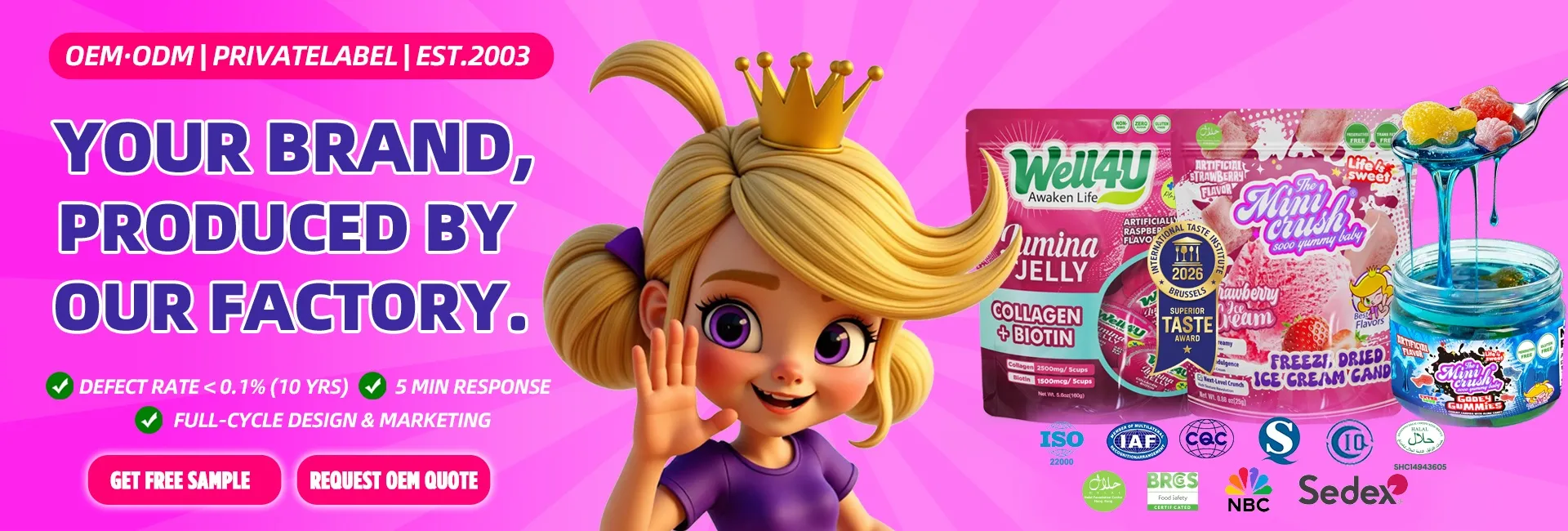


In the ever-evolving world of functional confectionery, collagen jelly has emerged as a category that demands careful evaluation beyond surface-level claims. For importers, wholesalers, and retail buyers, separating genuine value from marketing fluff is critical for building sustainable product lines. This guide cuts through the noise to provide actionable validation points for collagen jelly procurement. We'll focus on what truly matters in your decision-making process-without the exaggeration that often plagues this category. As you navigate today's market (even on April 1st!), having a clear validation framework ensures your collagen jelly selection stands the test of time.

What Buyers Validate First: The Proof Points That Matter
When evaluating collagen jelly suppliers, experienced buyers prioritize verifiable evidence over impressive claims. The first validation point should always be certification authenticity. Look beyond the logo-ask for current, unexpired certificates for ISO22000, HACCP, and BRC standards. Reputable manufacturers maintain transparent documentation that's readily available upon request, not just displayed on their website.
Ingredient traceability forms another critical validation point. For collagen jelly specifically, buyers should request documentation showing the collagen source (bovine, marine, or plant-based), processing methods, and third-party verification of purity. A trustworthy supplier provides batch-specific certificates of analysis (CoA) that verify collagen content without making unsupported health claims.
Production facility verification completes the initial validation triad. Rather than accepting generic facility photos, request recent audit reports from recognized bodies. Companies with strong export experience (15+ years in the market) typically welcome facility inspections and maintain records of compliance with international food safety regulations.
SKU Structure Rules That Drive Retail Success
Creating an effective collagen jelly SKU structure requires balancing variety with manageability. Successful buyers follow the "Rule of Three": limit core SKUs to three primary variants (such as classic, sugar-free, and fruit-infused) before introducing seasonal or limited editions. This approach prevents shelf clutter while providing sufficient consumer choice.
Packaging size strategy forms another essential component. Data shows that collagen jelly buyers respond best to a tiered packaging approach: single-serve portions for trial, mid-size packs for regular consumption, and value bundles for loyal customers. This structure accommodates different consumption occasions without overwhelming retail space.
Seasonal adaptation completes the SKU framework. Unlike traditional candies, collagen jelly benefits from aligning with wellness trends rather than just holidays. Consider introducing complementary SKUs that match seasonal wellness interests (like immunity support in winter or hydration-focused variants in summer) while maintaining your core product line stability.
Compliance Clarity: The Non-Negotiable Foundation
In collagen jelly procurement, regulatory compliance isn't just about meeting minimum standards-it's about building trust through transparency. Buyers should prioritize suppliers who clearly label all ingredients according to target market regulations, avoiding vague terms like "natural flavors" without specification.
Allergen management documentation represents another critical compliance area. For collagen jelly specifically, verify how manufacturers handle potential cross-contamination between gelatin-based and vegan alternatives. Leading producers maintain dedicated production lines or implement rigorous cleaning protocols between batches, with verification records available for review.
Country-of-origin labeling requirements vary significantly across markets. Experienced buyers confirm that suppliers understand and can comply with specific regulations in their target regions, whether that's the EU's strict labeling laws, FDA requirements in the US, or other regional standards. This attention to detail prevents costly compliance issues after purchase.
Shelf Performance: Designing for Consumer Engagement
Collagen jelly's success on retail shelves depends on strategic visual presentation that communicates value without making unsupported claims. Packaging should clearly differentiate the product from traditional gummies while highlighting its unique positioning-without venturing into medical territory.
Point-of-purchase materials that focus on usage occasions rather than health benefits tend to drive better sales. For example, "Perfect post-workout refreshment" or "A delightful addition to your evening routine" creates context without overpromising. Buyers should evaluate how suppliers support retail partners with compliant marketing materials that enhance shelf appeal.
Consumer sampling data provides valuable insight into potential shelf performance. Suppliers with established retail partnerships often have access to real-world trial data showing which flavors and formats resonate best with consumers. This information helps buyers make informed decisions about which collagen jelly variants will perform well in their specific market.

Reorder Stability: Building a Reliable Supply Chain
For collagen jelly buyers, reorder stability depends on understanding a supplier's production capacity and raw material sourcing strategy. Seasonal fluctuations in collagen availability can impact production, so buyers should inquire about suppliers' raw material inventory practices and alternative sourcing options.
Production lead times form another critical component of reorder stability. Unlike standard confectionery, collagen jelly often requires specialized equipment and longer production cycles. Buyers should confirm realistic lead times and how suppliers manage demand spikes, particularly around wellness-focused seasons.
Minimum order quantities (MOQs) must balance with your inventory management strategy. Progressive suppliers offer flexible MOQs that accommodate both large retailers and smaller specialty stores, often through strategic packaging configurations that maintain production efficiency while providing buyer flexibility.
Assortment Strategy: Maximizing Sales Through Thoughtful Curation
Successful collagen jelly assortments follow a strategic hierarchy rather than offering every available variant. Start with a core collection of 3-5 proven performers that represent your brand's identity, then add complementary items that address specific consumer needs without fragmenting your offering.
Consider creating "theme-based" collections rather than overwhelming consumers with individual SKUs. For instance, a "Wellness Rituals" collection might include morning energy, afternoon refreshment, and evening relaxation variants, each with distinct packaging cues but consistent branding.
Seasonal extensions should enhance rather than replace your core assortment. Rather than introducing entirely new products for holidays, consider limited edition flavors or packaging that maintains the fundamental product characteristics buyers have come to trust.

Buyer Checklist: Essential Validation Points for Collagen Jelly
- Use this practical checklist when evaluating collagen jelly suppliers:
- Current, verifiable food safety certifications (ISO22000, HACCP, BRC)
- Transparent ingredient documentation with collagen source specification
- Batch-specific certificates of analysis available upon request
- Clear allergen management protocols and documentation
- Production facility audit reports from recognized bodies
- Understanding of target market labeling regulations
- Realistic production lead times and capacity documentation
- Flexible packaging options that support different retail environments
- Evidence of successful retail partnerships in similar markets
- Clear communication about product limitations (no over-claiming)
Common Mistakes: Pitfalls to Avoid in Collagen Jelly Procurement
Overcomplicating the assortment represents one of the most common procurement mistakes. Buyers often select too many variants initially, leading to poor sell-through on individual SKUs and inventory imbalances. Start with a focused selection and expand based on actual consumer response.
Focusing solely on price rather than total value frequently backfires in the collagen jelly category. The lowest-cost option often lacks the documentation, quality control, and regulatory compliance that prevent costly issues down the line. Consider the full cost of potential compliance failures when evaluating pricing.
Neglecting to verify production capacity against your projected demand creates significant risk. A supplier might offer attractive terms but lack the ability to scale with your business, forcing you to switch suppliers prematurely and disrupting your product continuity.
Accepting vague ingredient claims without verification documentation opens buyers to regulatory risk. Phrases like "premium collagen" or "high-quality ingredients" without specific metrics or verification should raise red flags in your evaluation process.
Successful collagen jelly procurement hinges on establishing clear validation points that prioritize verifiable evidence over marketing hype. By focusing on transparent documentation, realistic performance expectations, and strategic assortment planning, buyers can build product lines that deliver consistent value to consumers and reliable returns to their businesses. The most sustainable collagen jelly offerings are those where suppliers demonstrate commitment to quality and compliance without overpromising, creating a foundation for long-term partnerships that withstand market fluctuations. In a category where credibility is paramount, choosing suppliers who prioritize proof points over claims ensures your procurement decisions remain sound-today and throughout the year.


