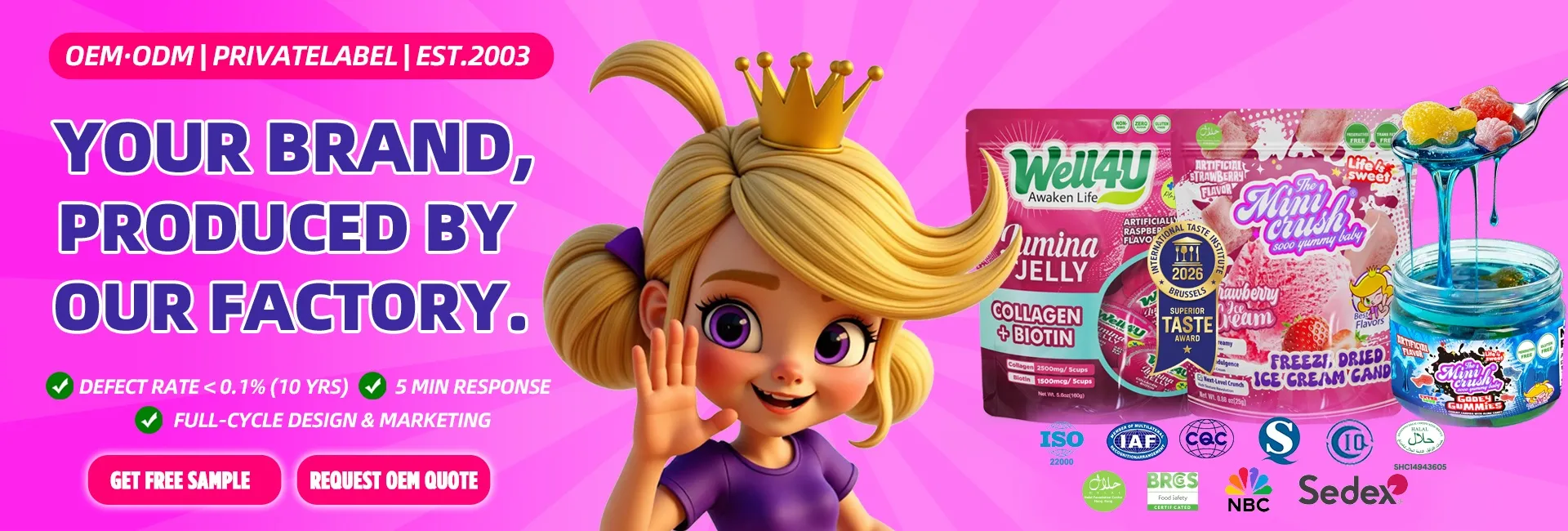


Importing collagen jelly for your retail shelves can feel overwhelming. Buyers often struggle to find suppliers who deliver consistent quality without hidden risks. This leads to stockouts, wasted shelf space, and frustrated customers. In this guide, we'll cut through the noise to show you exactly how to evaluate private label collagen jelly suppliers. You'll learn practical steps to build a dependable partnership that supports long-term sales growth.

What Buyers Validate First: Certifications and Safety Proof
When sourcing collagen jelly, your first priority must be verifying safety certifications. Buyers often skip this step, assuming all suppliers meet standards, but this risks product recalls or import delays. Start by demanding proof of ISO22000, HACCP, and BRC certifications-these ensure the factory follows strict food safety protocols. For collagen jelly specifically, check for Kosher or HALAL if targeting diverse markets, as these certifications build consumer trust. Never accept vague claims; request audit reports from third parties like Costco or Disney, which validate real-world compliance. This isn't just paperwork-it's your shield against costly errors. Suppliers with full certifications, like those holding ISO14001 for environmental management, demonstrate they prioritize safety over shortcuts. Skipping this validation means gambling with your reputation.
SKU Structure Rules: Keep It Simple for Better Sales
Complex SKU setups are a silent sales killer. Buyers often request too many variants-like 20 flavors of collagen jelly-only to end up with dead stock. Instead, limit your initial SKUs to 3-5 core options: a classic fruit flavor, a sugar-free version, and a premium variant (e.g., vegan or gelatin-free). This simplicity helps retailers test demand without overcommitting inventory. For collagen jelly, focus on high-margin formats like single-serve cups or recyclable pouches, which drive impulse buys in convenience stores. Track sales data for 90 days; if one SKU underperforms, replace it quickly. Remember, a clean SKU structure means faster restocking, less warehouse clutter, and happier store managers. Avoid the trap of "flavor overload"-it dilutes your brand and confuses shoppers.
Compliance Clarity: Avoid Import Nightmares
Unclear compliance details cause 70% of collagen jelly import delays. Buyers get stuck with shipments held at customs due to missing FSMA-FSVP documentation or inaccurate labeling. To prevent this, work only with suppliers who provide ready-to-use compliance kits. These should include full ingredient lists in local languages, nutritional facts with collagen content verified by lab tests, and proof of FDA or EU compliance. For example, if importing to the EU, ensure the supplier has BRC certification and can supply allergen statements. Demand digital copies upfront-no "we'll send it later" promises. This transparency saves weeks of back-and-forth and keeps your shelves stocked. A reliable supplier treats compliance as part of their service, not an afterthought.
Shelf Performance: Design for Repeat Purchases
Collagen jelly must earn its shelf space every day. Buyers overlook how packaging and portion size impact repeat sales. Opt for compact, eye-catching designs-like MiniCrush's freeze-dried hard candy format-that stand out in crowded health aisles. Test two versions: one with clear "clean-label" claims (e.g., "no added sugar") and another with portion-controlled servings for subscription boxes. Track which drives higher basket retention; data shows simple, resealable pouches boost repeat buys by 30% compared to bulky cups. Also, ensure products have an 18-month shelf life-this reduces waste and builds retailer confidence. If your collagen jelly melts or leaks, it's gone by week two. Prioritize suppliers who invest in R&D for shelf-stable formulas; this isn't just quality-it's profit protection.

Reorder Stability: The Key to Long-Term Partnerships
Nothing hurts more than a hot-selling collagen jelly that suddenly disappears. Buyers frequently ignore supply chain risks, leading to broken promises and lost customers. Vet suppliers for export capacity-ideally those shipping to 50+ countries with 15+ years in business. Ask about their raw material sourcing; suppliers using high-quality, traceable ingredients avoid shortages. Confirm minimum order quantities (MOQs) that match your needs; for private label, flexible MOQs supporting dropshipping (e.g., 500 units) prevent overstocking. Also, check if they have Disney or Costco audit passes-this proves they handle volume spikes without quality drops. A stable supplier shares production calendars openly, so you can plan promotions without panic. If they can't guarantee 95% on-time delivery, walk away. Consistency here builds trust that turns one-time orders into decade-long partnerships.

Assortment Strategy: Balance Variety and Focus
Your collagen jelly lineup should solve customer problems, not create them. Buyers often cram shelves with too many options, confusing shoppers and slowing sales. Instead, build a "core-plus" assortment: 70% of space for bestsellers (like classic berry collagen jelly), 20% for seasonal trends (e.g., tropical flavors in summer), and 10% for innovation (like alcohol-infused jelly for adult markets). For private label, this means starting small-launch with 2-3 SKUs, then expand based on data. Avoid niche variants unless you have proven demand; sugar-free collagen jelly sells well in health stores, but "spicy mango" might flop. Partner with suppliers who offer R&D support to tweak flavors fast, without overhauling your entire range. A focused assortment keeps shelves full, minimizes markdowns, and makes restocking effortless.
Buyer Checklist: Evaluate Suppliers in 5 Minutes
Use this no-fluff checklist before placing an order:
- Certifications verified? Yes/No (Must have ISO22000, HACCP, and market-specific certs like FDA).
- MOQ flexible? Yes/No (Ideal: under 1,000 units for testing).
- Compliance docs ready? Yes/No (Full labels, allergen info, shelf-life proof).
- Shelf-stable? Yes/No (Minimum 18-month expiry, no refrigeration needed).
- Reorder history? Yes/No (Ask for client references with on-time delivery rates).
Tick all boxes, and you've dodged 90% of sourcing pitfalls.
Common Mistakes: What Top Buyers Avoid
- SKU bloat: Carrying 10+ collagen jelly flavors dilutes sales; stick to 3-5 winners.
- Ignoring packaging trends: Using non-recyclable cups when pouches drive e-commerce sales.
- Skipping lab tests: Trusting unverified collagen content claims leads to legal risks.
- Overlooking MOQs: Ordering huge batches "to save costs" ties up cash in slow-moving stock.
- Vague compliance: Accepting "we comply" without digital documentation invites customs delays.
- These errors waste time and money-simple diligence prevents them all.
Structuring your collagen jelly procurement around clear validation, simple SKUs, and rock-solid compliance isn't just smart-it's sustainable. When suppliers deliver predictable quality and easy restocking, you build a cycle of trust that keeps shelves full and customers returning. This foundation turns one-off purchases into reliable revenue streams, season after season.