


Beyond Novelty: What SIAL Paris 2026 Reinforced About Market-Ready Food Innovation
Five days at SIAL Paris can expose you to thousands of products, new formats, emerging categories and ideas competing for attention.
But once the first impression passes, a more important question begins to shape the conversation:
Will this product actually work in my market?
That question stayed relevant throughout SIAL Paris 2026.
From 17–21 October, the global food industry came together at Paris Nord Villepinte to explore new products, technologies, consumer trends and commercial opportunities. Innovation was clearly at the centre of the event. SIAL Innovation alone received more than 2,750 product submissions in 2026, with 775 products selected, while the wider programme highlighted functional foods, sensory experiences, unconventional formats and changing consumer expectations.
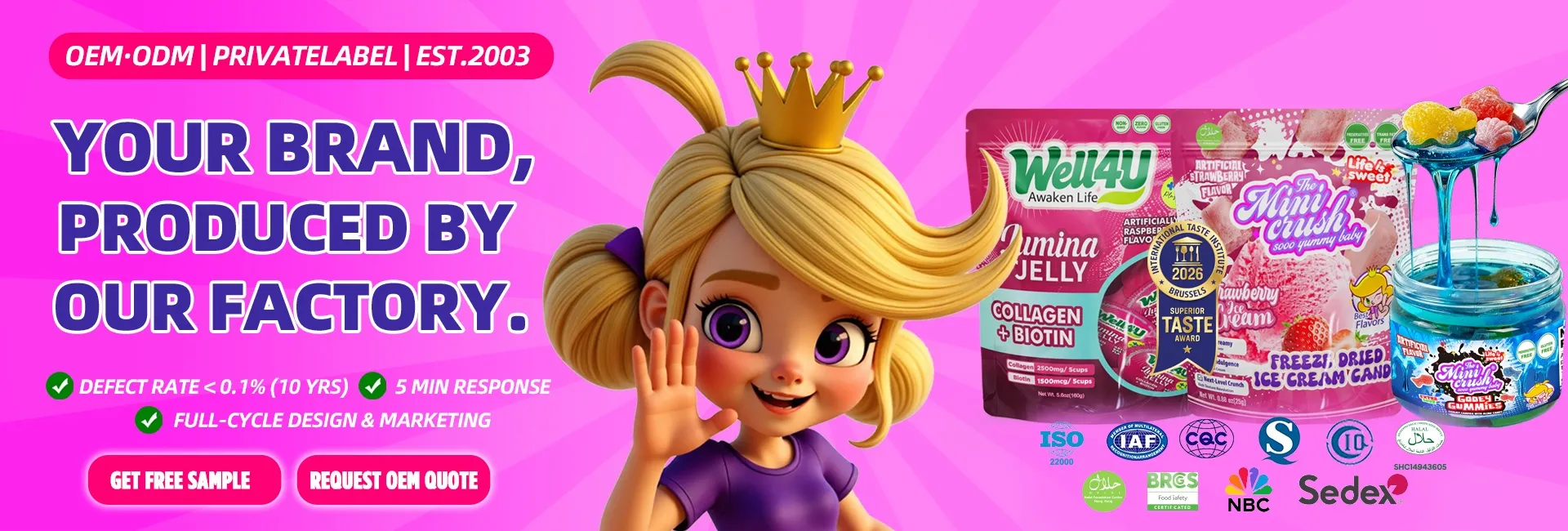
For Lita Food, SIAL was also an opportunity to meet buyers and partners face-to-face, present confectionery and functional concepts, and discuss what different markets actually require.
One takeaway became increasingly clear:
Novelty may start the conversation. Market readiness determines where that conversation can go next.
1. Differentiation needs to be immediately understandable
With so many products competing for attention, differentiation remains important.
But being different is not enough.
A buyer needs to understand quickly what makes a concept relevant:
What is different about the experience?
Who is the intended consumer?
Where could the product sit within an existing category or portfolio?
What reason would a consumer have to choose it?
This distinction matters.
A new flavor can create temporary novelty. A more distinctive format, texture, usage experience or product proposition can create a stronger reason for the product to exist.
SIAL Innovation's 2026 selection reflected this wider movement. According to SIAL, many selected concepts were becoming more sensory, more functional and increasingly difficult to place within traditional category boundaries.
For confectionery, this creates interesting possibilities.
Interactive products can turn consumption into an experience. New textures can reshape familiar candy formats. Functional concepts can introduce a different reason to purchase.
But the commercial proposition still needs to remain clear.
The strongest innovation is not simply unusual. It gives the buyer a clear story to take to the market.

2. Functionality is increasingly connected to the consumer experience
Functional food was another visible theme at SIAL Paris 2026, with the official innovation programme identifying functional products as one of the directions influencing the market.
For manufacturers and buyers, however, functionality raises an important product-development question:
How should the function be delivered?
Ingredients matter, but so do format, taste, convenience, packaging and positioning.
Consumers do not experience a formulation as a technical specification. They experience the finished product.
That means a functional concept needs to consider more than what is inside it. It also needs to consider how the product fits into everyday consumption.
This is particularly relevant for functional confectionery and jelly formats.
A familiar, ready-to-eat format can offer a different experience from more traditional wellness formats. But successful development still depends on balancing formulation requirements with taste, texture, packaging, communication and the expectations of the target market.
For buyers, the discussion therefore moves beyond:
"What functional ingredient does this contain?"
towards:
"Does this format make sense for the consumer we want to reach?"
That is a much more commercially useful question.
3. Market adaptation should begin before launch
One of the biggest mistakes in international product development is assuming that a concept that works in one market can simply be transferred unchanged into another.
Markets differ.
Consumer taste preferences differ. Retail structures differ. Packaging expectations differ. Regulatory requirements differ. Price positioning, communication style and competitive environments can also change considerably.
As a result, product adaptation should not be treated as an adjustment made only after a product struggles.
It should be part of the development conversation from the beginning.
For a confectionery or functional product, adaptation may involve factors such as flavor direction, sweetness or sourness profile, formulation, pack size, packaging design, product naming, visual communication, positioning or channel strategy.
Not every element needs to change.
The important point is to determine which elements need to remain consistent and which should be adapted to improve product-market fit.
This changes the relationship between buyer and manufacturer.
Instead of beginning with:
"Which existing product would you like to buy?"
the more valuable conversation can become:
"What are you trying to achieve in your market, and how should the product be developed around that opportunity?"
That is where manufacturing begins to become product-development partnership.
4. Packaging is part of the product strategy
Packaging is sometimes discussed too late in the development process.
But in retail, packaging is not simply a container for the product. It is part of how the product is understood.
Before a consumer experiences the flavor, texture or functionality, they usually experience the packaging.
It has to communicate:
what the product is,
why it is different,
who it is for,
and why someone should pay attention to it.
For innovative confectionery, packaging may also need to explain an unfamiliar format or usage experience.
For functional products, it may need to balance category familiarity with a more wellness-oriented proposition, while remaining appropriate for the target market and applicable regulatory requirements.
For importers, retailers and private-label buyers, packaging therefore becomes part of the commercial assessment.
A concept can be technically strong and still require considerable work before it is shelf-ready.
That is why packaging strategy should develop alongside the product rather than after it.

5. Buyers are building portfolios, not simply collecting new SKUs
Trade shows naturally put individual products under the spotlight.
Commercial buyers, however, often have to look beyond the individual SKU.
They may be asking:
How does this product fit our current assortment?
Does it complement something we already sell?
Can the concept develop into additional flavors, formats or variants?
Could it support seasonal activity?
Can it become a private-label platform rather than a one-time product?
Does it make sense for our retail or distribution channels?
These questions change how manufacturers should think about innovation.
A strong product can create an order.
A strong product platform can create a longer-term commercial opportunity.
That platform might begin with one product but offer room for adaptation across flavor, format, packaging, consumer occasion or market positioning.
For international buyers managing multiple categories or markets, that flexibility can be particularly valuable because it allows product development to evolve rather than restart from zero each time.
6. Commercial readiness matters as much as creative ambition
One of SIAL Paris 2026's own sessions focused directly on the question of how food innovation moves from science to commercial success, highlighting factors including validation, industrialisation, regulation, positioning and consumer adoption.
That distinction between innovation and commercialization is important.
A concept can be creative without being commercially ready.
For buyers, the evaluation eventually becomes practical:
Can consumers understand it?
Can it be positioned clearly?
Does the packaging work?
Can it be adapted where necessary?
Does it fit a real channel or consumption occasion?
Does the proposition justify its place within the portfolio?
Can the concept move from a trade-show conversation to a viable product?
On the final day of SIAL Paris 2026, the event itself framed the food business around the intersection of quality, cost and agility - a useful reminder that commercial success requires several factors to work together.
Innovation attracts attention.
Commercial readiness creates opportunity.

What SIAL Paris 2026 means for Lita Food
For Lita Food, SIAL Paris 2026 was valuable not only because it allowed us to present products, but because it created space for direct conversations with people working across different markets.
Those discussions are important.
They help us think beyond the product itself and consider the questions surrounding market fit, product experience, customization, packaging, portfolio development and commercialization.
Across MiniCrush and Well4U, our objective is not simply to develop more products.
It is to continue developing concepts that can become more relevant to the markets and partners they are intended for - whether the opportunity involves interactive confectionery, functional jelly, private-label development or broader product adaptation.
That requires listening before developing.
It requires understanding the commercial context around the product.
And it requires treating innovation as the beginning of a process rather than the end result.
From Paris to what comes next
SIAL Paris 2026 may be over, but the most important work begins after the exhibition.
Trade-show discussions need to become follow-up conversations.
Ideas need to become clearer briefs.
Product interest needs to be evaluated against real market requirements.
And the right concepts need to move from possibility toward commercialization.
Thank you to everyone who visited Lita Food at Booth 5A J252, explored our products and shared perspectives from your markets with our team.
Those conversations are one of the most valuable outcomes of an international exhibition.
And for companies developing the next generation of confectionery and functional products, perhaps the most useful question after SIAL is not:
"What was the newest product we saw?"
It is:
"Which idea has the strongest potential to work in our market - and what will it take to make it market-ready?"
If we did not have the opportunity to meet in Paris, we would still be interested to hear what you are looking for in your market.


