
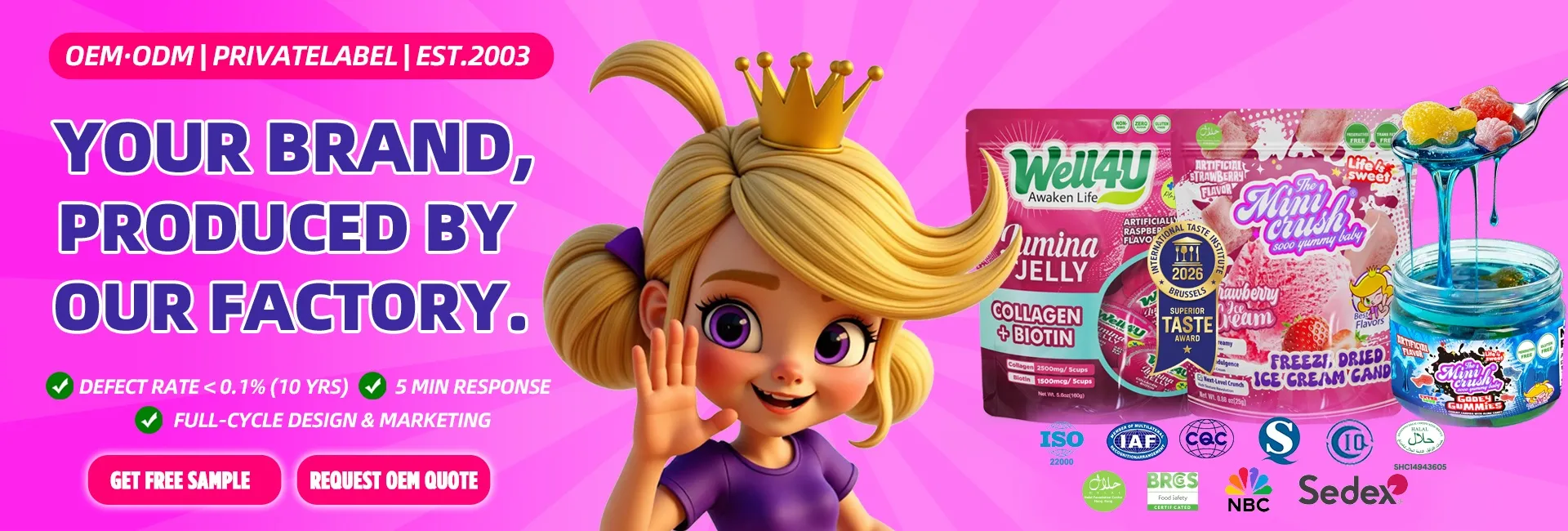


In recent years, many countries have begun to introduce stricter new regulations for children's food. Starting in 2025, the EU, the UK, and some Middle Eastern countries have successively clarified that they will implement higher standards of review for candy, gummies, and snacks sold to minors, covering marketing content, packaging design, and nutritional structure.

Key Trends of the New Policies
Regulatory authorities are focusing on:
- Prohibition of using cartoon characters to induce children to consume
- Packaging must not convey suggestive information such as "unlimited consumption" or "healthy growth"
- Requirement for sugar and calorie labeling to be clearly displayed on the front
This change signifies that the confectionery industry is transforming from an "entertainment consumer product" to a "responsible food category."
Industry Impacts Are Emerging
Brands that traditionally rely on bright visuals and emotional marketing are facing challenges:
- Packaging designs are being forced to be redesigned
- Some child-oriented products have been removed from shelves
- Marketing promotional language is facing comprehensive restrictions
Industry competition is shifting from "visual appeal" to "ingredient transparency" and "product safety attributes."
MiniCrush's Forward-Looking Strategy
As a freeze-dried sweets supplier with international market experience, MiniCrush has proactively adjusted its product structure:
- Proactively reducing the sugar density of its children's line
- Conducting label compliance testing on all products in key markets in advance
- Establishing internal audit standards for children's food
MiniCrush states that the core competitiveness of its future confectionery products will no longer be "appealing," but rather whether they truly meet the health consumption standards of the next generation.


