
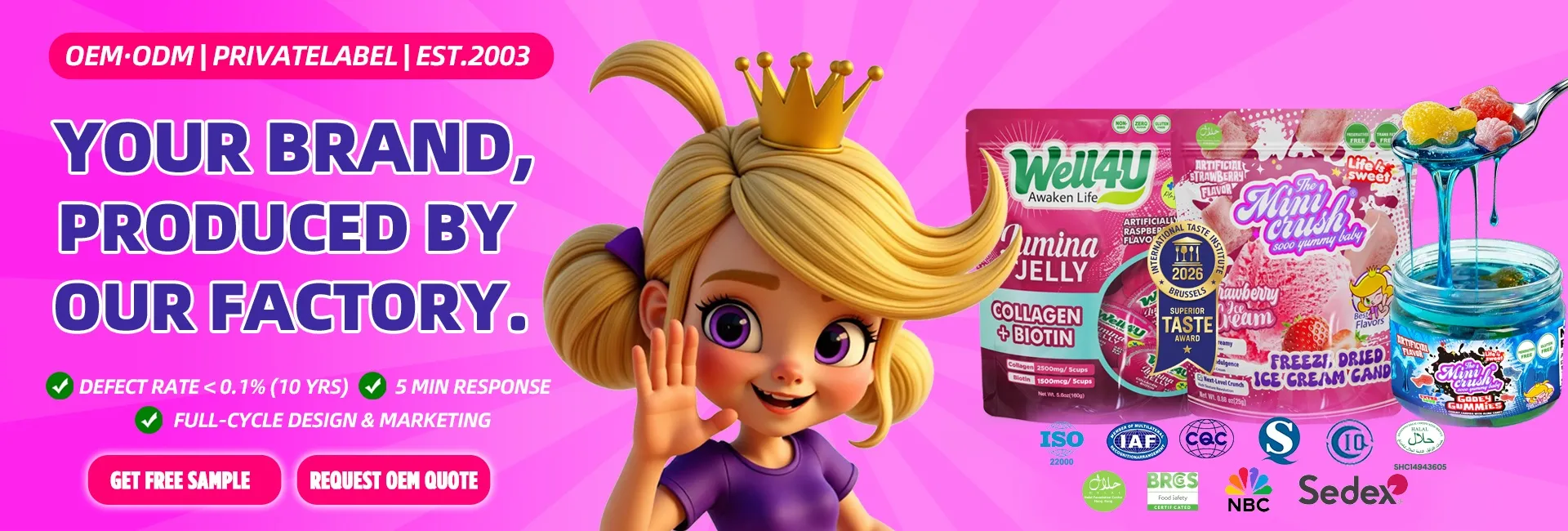


The global confectionery industry is undergoing a remarkable transformation, driven by evolving consumer preferences, innovative product development, and increasingly complex supply chain dynamics. Among the most exciting segments of this market is the wholesale soft candy category, particularly the rapidly growing niche of slime liquid candy. As retailers, distributors, and brand owners seek to meet surging demand for these interactive, multi-sensory treats, understanding typical lead times for wholesale shipments has never been more critical. This comprehensive guide explores the intricacies of lead times in the soft candy industry, with a special focus on the innovative Slime liquid candy from Nantong Litai Jianlong Food Co., Ltd. (MiniCrush), and how industry leaders are streamlining their operations to deliver exceptional products on schedule.
1. The Wholesale Soft Candy Industry: An Overview
The wholesale soft candy market represents a substantial and growing segment of the global confectionery industry. Valued at over $11 billion in 2023, the liquid candy market alone is projected to reach $16.79 billion by 2033, growing at a compound annual growth rate (CAGR) of 4.3% throughout the decade. This robust growth is fueled by several key factors:

Evolving Consumer Preferences: Modern consumers, particularly younger demographics, are increasingly drawn to interactive, multi-textural, and visually appealing candy experiences. Slime liquid candy, with its stretchy, gooey texture and vibrant colors, perfectly aligns with these trends.
Rise of Novelty Confectionery: Social media platforms have created unprecedented demand for "Instagrammable" food products, and slime candy, with its striking appearance and satisfying tactile properties, has become a viral sensation.
Expanding Distribution Channels: v are now available through a diverse range of channels, including supermarkets, convenience stores, specialty candy shops, and online retailers, driving broader market reach and higher volume requirements.
Innovative Flavor and Formulation Development: Manufacturers are constantly introducing new flavors, formulations, and product variants, including vegan, sugar-free, and gelatin-free options, to cater to diverse dietary needs and preferences.
Within this dynamic landscape, lead time management has emerged as a critical competitive advantage. Retailers and distributors need reliable, predictable delivery schedules to manage inventory effectively, meet seasonal demand fluctuations, and capitalize on emerging trends before they peak. For manufacturers like Nantong Litai Jianlong Food Co., Ltd., optimizing lead times is not just about operational efficiency-it's about meeting customer expectations and maintaining market leadership.
2. Understanding Lead Times in Wholesale Soft Candy Shipments
Lead time, in the context of wholesale soft candy shipments, refers to the total duration from when a customer places an order to when the products are delivered to their specified location. This process involves multiple interconnected stages, each with its own timeline and potential variables. Understanding these components is essential for both buyers and sellers in the industry.
2.1 Components of Lead Time
A typical wholesale soft candy order goes through several key stages, each contributing to the overall lead time:
- Order Confirmation & Processing (1–3 days): Once a purchase order is received, the manufacturer reviews specifications, confirms availability, and processes the order. For new customers, this may also include account setup, credit checks, and contract finalization.
- Raw Material Sourcing & Preparation (2–3 weeks): For custom or large-volume orders, manufacturers may need to source specific ingredients, packaging materials, or components. While established suppliers maintain inventory of common ingredients, specialty flavors, colors, or packaging may require additional lead time.
- Production & Manufacturing (2–4 weeks): This is the core of the lead time, during which the soft candy are produced. The duration depends on several factors:
- Order volume and complexity
- Production line availability and scheduling
- Formulation complexity (e.g., multi-layered gummies vs. simple liquid candy)
- Quality control and testing requirements
- Seasonal demand peaks and factory capacity
4.Packaging & Labeling (3–7 days): Finished products are packaged according to customer specifications, including any private labeling, display packaging, or special configurations required for retail shelves.
5.Quality Assurance & Compliance Checks (3–5 days): Before shipment, products undergo comprehensive testing to ensure they meet food safety standards, including microbial testing, weight checks, and compliance with international regulations such as FSMA, HACCP, and BRC.
6.Shipping & Logistics (varies by destination): The final stage involves transporting the finished goods from the manufacturer's facility to the customer's warehouse. Lead times here depend on the shipping method and destination:
- Air freight: 3–7 days (for urgent orders or samples)
- Sea freight: 20–35 days (standard for bulk international shipments)
- Domestic trucking: 3–10 days, depending on distance
2.2 Typical Lead Times by Order Type
In the wholesale soft candy industry, lead times can vary significantly based on the nature of the order. Here are the most common scenarios:
|
Order Type |
Typical Lead Time |
Notes |
|---|---|---|
|
Standard Stock Orders |
7–14 days |
For existing products with standard packaging, ready for immediate shipment |
|
OEM/ODM Production Orders |
25–45 days |
From deposit confirmation to shipment, including production and quality checks |
|
Custom Formulation/Branding |
45–60 days |
Including product development, sampling, and approval phases |
|
Urgent/Rush Orders |
14–21 days |
Possible for small volumes, subject to production capacity and additional fees |
As a leading manufacturer, Nantong Litai Jianlong Food Co., Ltd. offers standard lead times of 25 days for OEM/ODM orders after deposit confirmation, demonstrating their efficiency and reliability in meeting customer timelines.
3. The Rise of Slime Liquid Candy: A New Era in Confectionery
Among the most exciting developments in the soft candy category is the emergence of slime liquid candy. This innovative product category combines the appeal of traditional liquid candy with the interactive, sensory experience of slime, creating a treat that is both delicious and entertaining.
3.1 What is Slime Liquid Candy?
Slime liquid candy is a unique confectionery product characterized by its stretchy, gooey texture and vibrant appearance. Unlike traditional liquid candy, which is typically consumed directly from a container, slime candy is designed to be manipulated, stretched, and played with before eating. The result is a multi-sensory experience that has captivated consumers, particularly children and young adults, around the world.
The appeal of slime liquid candy extends beyond its taste. Its visual appeal, with bright, eye-catching colors and satisfyingly stretchy consistency, has made it a social media phenomenon. Platforms like TikTok and Instagram are filled with videos of users playing with and eating slime candy, driving viral demand and creating a new market segment for these innovative treats.
3.2 Nantong Litai Jianlong Food Co., Ltd. and MiniCrush: Leading the Slime Candy Revolution
At the forefront of the slime liquid candy revolution is Nantong Litai Jianlong Food Co., Ltd., operating under the brand name MiniCrush. Founded in 2009, the company has over 15 years of manufacturing and export experience, establishing itself as a top exporter of soft candy products in China with distribution to more than 50 countries worldwide.

MiniCrush's Slime liquid candy represents the pinnacle of the company's R&D capabilities and innovation. As the first freeze-dried candy manufacturer in China, MiniCrush has leveraged its expertise in candy technology to develop a slime candy product that stands out in the market:
- Unique Formulation: The slime candy features a proprietary formula that delivers the perfect balance of stretchiness, flavor, and texture, creating a satisfyingly gooey experience that consumers love.
- Vibrant Appearance: The candy comes in eye-catching colors, making it visually appealing and perfect for social media sharing.
- Multi-Sensory Experience: Combining the tactile enjoyment of playing with slime with the delicious taste of candy, the product offers a unique experience that sets it apart from traditional confectionery.
- Quality and Safety: Like all MiniCrush products, the slime liquid candy is produced in compliance with international food safety standards, including ISO22000, HACCP, and BRC certifications, ensuring product safety and quality.
3.3 The Growing Market for Slime Liquid Candy
The slime liquid candy market is experiencing explosive growth, driven by several key factors:
Social Media Virality: The visual and interactive nature of slime candy makes it ideal for social media sharing, creating organic marketing and driving consumer demand.
Innovative Product Category: As a relatively new product category, slime candy offers retailers and distributors a unique selling proposition that can help them stand out in a crowded market.
Appeal to Multiple Demographics: While particularly popular with children, slime candy also appeals to teenagers and young adults who enjoy the nostalgic, playful experience and the visually striking product.
Expanding Distribution: Slime liquid candy is now available in a variety of retail channels, from specialty candy shops to major supermarket chains, making it accessible to a broad consumer base.
As a result of these trends, demand for slime liquid candy continues to grow, creating new opportunities for manufacturers and retailers alike.
4. Factors Affecting Lead Times in Slime Liquid Candy Production
Producing slime liquid candy involves unique challenges that can impact lead times. Understanding these factors is essential for both manufacturers and buyers in the wholesale soft candy industry.

4.1 Formulation and Production Complexity
Slime liquid candy requires a specialized formulation to achieve its unique texture and consistency. This involves careful balancing of ingredients, including sweeteners, thickeners, flavorings, and colorants. The production process must be carefully controlled to ensure the right consistency, requiring specialized equipment and expertise.
For custom formulations, additional lead time may be required for research and development, testing, and optimization. Even for standard products, the production process for slime candy can be more complex than traditional soft candy, requiring careful monitoring and quality control at every stage.
4.2 Packaging Requirements
Slime liquid candy often requires specialized packaging to preserve its texture and prevent leaks. Many products are sold in jars, squeeze bottles, or other containers designed to contain the gooey liquid while allowing consumers to easily access and manipulate the candy.
The need for custom packaging can impact lead times, particularly for private label or custom-branded products. Lead times for packaging materials, including design, printing, and production, must be factored into the overall order timeline.
4.3 Seasonal Demand Fluctuations
Like many confectionery products, slime liquid candy experiences seasonal demand fluctuations, with peak periods around holidays, summer months, and back-to-school seasons. These peaks can strain production capacity, potentially extending lead times for orders placed during busy periods.
To manage seasonal demand, manufacturers often recommend placing orders well in advance of peak periods. For example, holiday-themed slime candy orders should ideally be placed 3–4 months in advance to ensure timely delivery.
4.4 Quality Control and Compliance
Given the unique nature of slime liquid candy, additional quality control measures may be required to ensure product safety and consistency. This includes testing for microbial stability, ensuring packaging integrity, and verifying compliance with food safety regulations in target markets.
For international shipments, additional compliance checks may be required, including documentation, labeling, and certification verification. These steps can add to the overall lead time, particularly for new customers or products entering new markets.
5. How Nantong Litai Jianlong Food Co., Ltd. Optimizes Lead Times
As a leading manufacturer in the wholesale soft candy industry, Nantong Litai Jianlong Food Co., Ltd. has implemented several strategies to optimize lead times and ensure on-time delivery for customers. These efforts reflect the company's commitment to customer satisfaction and operational excellence.
5.1 Streamlined Production Processes
The company has invested in modern production facilities and equipment to maximize efficiency and throughput. With dedicated production lines for different product categories, including soft candy, gummies, and slime candy, the company can process orders quickly while maintaining high quality standards.
By implementing strict GMP (Good Manufacturing Practices) standards, the company ensures consistent production processes, reducing the risk of delays due to quality issues or production errors.
5.2 Robust Supply Chain Management
Nantong Litai Jianlong maintains strong relationships with reliable suppliers of raw materials and packaging components, ensuring a steady supply of high-quality inputs. By maintaining strategic inventory levels of common ingredients and packaging materials, the company can minimize lead times for standard orders.
For custom or specialty orders, the company works closely with customers to understand their requirements early in the process, allowing for proactive sourcing and preparation of necessary materials.
5.3 Advanced Quality Control Systems
The company has implemented comprehensive quality control systems to ensure that products meet all required standards before shipment. By conducting quality checks at every stage of production-from raw material inspection to final product testing-the company can identify and resolve issues early, preventing delays later in the process.
Nantong Litai Jianlong's extensive certifications, including ISO22000, ISO14001, HACCP, BRC, HALAL, Kosher, and FSMA-FSVP, demonstrate its commitment to quality and compliance, reducing the risk of delays due to regulatory issues.
5.4 Flexible Order Scheduling
Recognizing that customers have varying needs, the company offers flexible order scheduling options to accommodate different lead time requirements. For urgent orders, subject to capacity, the company may be able to offer expedited production and shipping options.
For large or complex orders, the company works with customers to develop detailed production schedules, providing transparency into the process and ensuring alignment on timelines and milestones.
5.5 Logistics Expertise
With over 15 years of export experience, Nantong Litai Jianlong has developed deep expertise in international logistics. The company works with reliable freight forwarders and shipping partners to ensure timely delivery of orders to destinations around the world.
By leveraging its experience with customs documentation and international shipping requirements, the company helps customers navigate the complexities of global trade, reducing the risk of delays due to logistics issues.
6. Tips for Managing Lead Times in Wholesale Soft Candy Orders
For retailers, distributors, and brand owners looking to order slime liquid candy and other soft candy, effective lead time management is essential. Here are some practical tips to ensure timely delivery and avoid supply chain disruptions:
6.1 Plan Ahead, Especially for Peak Seasons
Confectionery products, including slime liquid candy, often experience increased demand during holiday seasons, summer months, and back-to-school periods. To avoid delays and stockouts, place orders well in advance of these peak periods.
For example, consider the following timeline:
Summer/Beach Season: Place orders by March/April for delivery by May/June
Back-to-School: Place orders by June/July for delivery by August/September
Holiday Season: Place orders by August/September for delivery by October/November
6.2 Communicate Clearly with Your Supplier
Effective communication with your manufacturer is key to managing lead times successfully. Be clear about your requirements, timelines, and any special needs or constraints. Provide detailed specifications for your order, including product type, packaging, labeling, and delivery requirements.
For custom orders, discuss the development timeline upfront and agree on milestones and approval processes to avoid delays later in the process.

6.3 Consider Stock vs. Custom Orders
For standard products, consider ordering from stock when possible. Stock orders typically have shorter lead times (7–14 days) and can help you meet immediate demand or replenish inventory quickly.
For custom or private label products, be prepared for longer lead times (45–60 days) and plan accordingly. Work with your supplier to balance customization needs with delivery timelines.
6.4 Build in a Buffer for Unexpected Delays
Even with careful planning, unexpected delays can occur due to factors beyond anyone's control, such as weather events, port congestion, or regulatory changes. Build a buffer of 1–2 weeks into your lead time expectations to account for potential disruptions.
6.5 Work with a Reliable Supplier
Choose a manufacturer with a proven track record of on-time delivery and reliable customer service. Nantong Litai Jianlong Food Co., Ltd., with its extensive experience, certifications, and commitment to quality, has established itself as a trusted partner for wholesale soft candy orders.
7. The Future of Slime Liquid Candy and Lead Time Optimization
As the slime liquid candy market continues to grow and evolve, manufacturers and suppliers are working to optimize lead times while maintaining the high quality and innovation that consumers demand. Several trends are shaping the future of the industry:
7.1 Advancements in Production Technology
New technologies and equipment are being developed to streamline the production of slime liquid candy, improving efficiency and reducing lead times. Automated mixing and filling systems, advanced quality control technologies, and optimized packaging processes are helping manufacturers produce more products faster while maintaining consistent quality.

7.2 Increased Focus on Supply Chain Resilience
The global supply chain disruptions of recent years have highlighted the importance of resilient supply chains. Manufacturers like Nantong Litai Jianlong are investing in diversified sourcing, increased inventory of critical materials, and alternative logistics solutions to reduce risk and ensure reliable delivery.
7.3 Growing Demand for Customization
Consumers are increasingly seeking unique and personalized products, driving demand for custom formulations, flavors, and packaging. To meet this demand while managing lead times, manufacturers are developing modular production processes and flexible manufacturing systems that allow for quick changeovers between different product variants.
7.4 Digital Transformation in Order Management
Digital technologies are transforming the way wholesale soft candy orders are managed, from initial inquiry to final delivery. Online ordering platforms, real-time production tracking, and digital documentation systems are improving transparency and efficiency, reducing lead times and minimizing errors.
The wholesale soft candy industry, particularly the rapidly growing segment of slime liquid candy, offers exciting opportunities for retailers, distributors, and consumers alike. As demand for these innovative products continues to rise, understanding and managing lead times has become more important than ever.
From order processing and production to packaging, quality control, and shipping, each stage of the supply chain contributes to the overall lead time for wholesale soft candy shipments. For slime liquid candy, with its unique formulation and packaging requirements, lead times can vary based on several factors, including order complexity, customization needs, and seasonal demand.
Manufacturers like Nantong Litai Jianlong Food Co., Ltd. (MiniCrush) are leading the way in optimizing lead times while maintaining the high quality and innovation that consumers demand. Through streamlined production processes, robust supply chain management, advanced quality control systems, and logistics expertise, the company is able to deliver exceptional slime liquid candy products on schedule to customers around the world.
For buyers in the wholesale soft candy industry, effective lead time management requires careful planning, clear communication with suppliers, and building strong partnerships with reliable manufacturers. By understanding the typical lead times for different order types, planning ahead for peak seasons, and working with trusted suppliers like MiniCrush, retailers and distributors can ensure they meet consumer demand for these exciting new products while maintaining efficient operations.
As the slime liquid candy market continues to evolve, lead time optimization will remain a key competitive advantage. By staying ahead of trends, investing in technology and infrastructure, and maintaining a customer-focused approach, manufacturers like Nantong Litai Jianlong are well-positioned to meet the growing demand for these innovative confectionery products, now and into the future.


