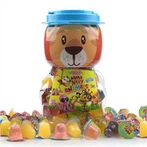


As a candy importer or retail buyer, finding the right fruit jelly supplier can make or break your product line. You need partners who deliver consistent quality, flexible customization, and hassle-free reorders. This guide cuts through the noise to show you how to evaluate suppliers and build a sourcing strategy that minimizes risk and maximizes shelf appeal. Forget guesswork-we'll focus on practical steps to ensure your jelly candy assortment stays fresh, compliant, and profitable season after season.

What Buyers Validate First: Quality and Compliance Basics
When you're reviewing a new fruit jelly supplier, your first checkpoint should always be quality assurance and regulatory compliance. Buyers often skip deep dives here, only to face recalls or shipment delays later. Start by confirming the supplier holds active international certifications like ISO22000 or BRC-these aren't just paperwork; they prove the factory follows strict hygiene and safety protocols. For example, a reliable partner will have heavy metal and pesticide residue testing that exceeds industry norms by 30%, reducing contamination risks. Next, check their audit history: suppliers approved by major retailers like Costco or Disney have already passed rigorous third-party checks, saving you time and liability. Finally, verify allergen controls. If you're sourcing vegan or hypoallergenic options like slime liquid candy, ensure the factory uses dedicated production lines to avoid cross-contamination. Skipping these steps might get you a cheap quote today, but it could cost you shelf space tomorrow.
SKU Structure Rules: Keep It Simple, Scalable, and Smart
A cluttered SKU portfolio is the fastest way to drain your margins and confuse shoppers. Buyers should prioritize suppliers who offer a streamlined yet adaptable SKU range-ideally under 10 core variants per category. For fruit jellies, this means grouping by texture (e.g., soft, chewy, or slime-style), flavor intensity, and dietary tags (sugar-free, gelatin-free). Avoid vendors pushing 50+ SKUs upfront; instead, look for those who let you start small with 3–5 hero products and scale based on sales data. A strong supplier will also support fast sampling-like 15-day turnarounds for custom shapes or colors-so you can test new items without long commitments. Remember, each extra SKU adds complexity to your inventory, labeling, and marketing. Stick to a "test-learn-expand" approach: launch with bestsellers like classic fruit flavors, then layer in innovations like slime liquid candy only after validating demand. This keeps your assortment focused and your warehouse costs low.
Shelf Performance: Design for Impulse and Repeat Buys
Your jelly candies need to grab attention fast-especially in crowded retail aisles. Buyers often underestimate how packaging and product design impact turnover rates. Prioritize suppliers who optimize for shelf efficiency: think compact, eye-catching wrappers that stand out in 3 seconds or less. For slime liquid candy, for instance, vibrant colors and playful shapes (like squeezable pouches or novelty molds) drive impulse purchases, but they must also protect the product. Check the supplier's damage rate during shipping; a rate below 2% (thanks to automated handling and sturdy packaging) means fewer replacements eating into your profits. Also, consider how the product feels in-hand-soft jellies should have a consistent texture that doesn't stick to wrappers, while slime variants need leak-proof seals. Test this by ordering samples and simulating shelf conditions. If items melt, discolor, or lose shape within days, pass. Great shelf performance isn't luck; it's built into the production process through low-temperature techniques that preserve color and firmness.
Reorder Stability: The Lifeline of Your Supply Chain
Nothing frustrates buyers more than inconsistent supply. To avoid stockouts that kill momentum, vet suppliers for production resilience. Key red flags include manual-heavy workflows or single-factory dependence. Instead, seek partners with automated scale-like 24 imported production lines running 80% automation-to handle large orders without hiccups. Daily output capacity (e.g., 10+ tons) ensures they can scale with your growth, while multi-country export experience (50+ destinations) proves they navigate logistics smoothly. Crucially, confirm their raw material sourcing: suppliers with AI pre-screening for ingredients avoid shortages caused by seasonal crop failures. For slime liquid candy, this means stable gum or pectin supplies to maintain texture batch after batch. Also, ask about their reorder lead times; reliable vendors offer fixed schedules (e.g., 30-day cycles) and buffer stock for peak seasons. If a supplier can't guarantee 95%+ on-time delivery across 3+ orders, they're not ready for your business.

Assortment Strategy: Balance Variety with Focus
Your jelly lineup shouldn't be a rainbow of confusion-it needs strategic cohesion. Buyers succeed by curating assortments around three pillars: core staples (like fruit punch or berry blends), seasonal twists (e.g., tropical flavors for summer), and hero innovations (like slime liquid candy for Gen Z appeal). Start with 60% core SKUs for steady revenue, 30% seasonal for trend relevance, and 10% experimental for testing new markets. But avoid overcomplicating-each category should share base ingredients to simplify production. For example, a supplier with 100+ SKUs across freeze-dried hard/soft candy can easily adapt formulas for slime variants without new certifications. Also, align flavors with your region's preferences: sour profiles dominate in Asia, while creamy notes win in Europe. Track sell-through rates monthly; if any SKU dips below 70% shelf fill after two cycles, phase it out. A focused assortment reduces waste, boosts velocity, and makes promotions more impactful.

Buyer Checklist
Use this quick reference to vet fruit jelly suppliers before committing:
Certifications: Confirm active ISO22000, BRC, or HACCP-no expired docs.
Sample Quality: Test texture, color retention, and packaging integrity after 7 days.
MOQ Flexibility: Ensure minimum orders fit your volume (e.g., under 500 units for startups).
Damage Rate: Require proof of <2% shipping loss from recent shipments.
Reorder Speed: Verify lead times for repeat orders (under 30 days is ideal).
Customization Proof: Ask for photos of past client projects, like slime candy molds.
SKU Overload: Launching 20+ variants at once dilutes marketing spend and confuses buyers. Stick to 5–7 core items.
Ignoring Compliance Details: Assuming "FDA-approved" covers all regions-always verify local label laws (e.g., EU allergen fonts).
Skipping Shelf Tests: Ordering bulk without simulating store conditions leads to melted or stale products on arrival.
Overlooking Supplier Scale: Choosing small workshops for "craft" appeal, then facing delays during holiday spikes.
Vague Customization: Requesting "fun shapes" without specs causes misprints-provide exact templates upfront.
A well-structured fruit jelly sourcing strategy isn't about finding the cheapest deal-it's about building partnerships that grow with you. When suppliers prioritize clear compliance, smart SKU design, and reliable production, you get consistent shelf presence that drives repeat purchases. Focus on vendors who make reordering effortless, and you'll turn seasonal hits into year-round staples.