
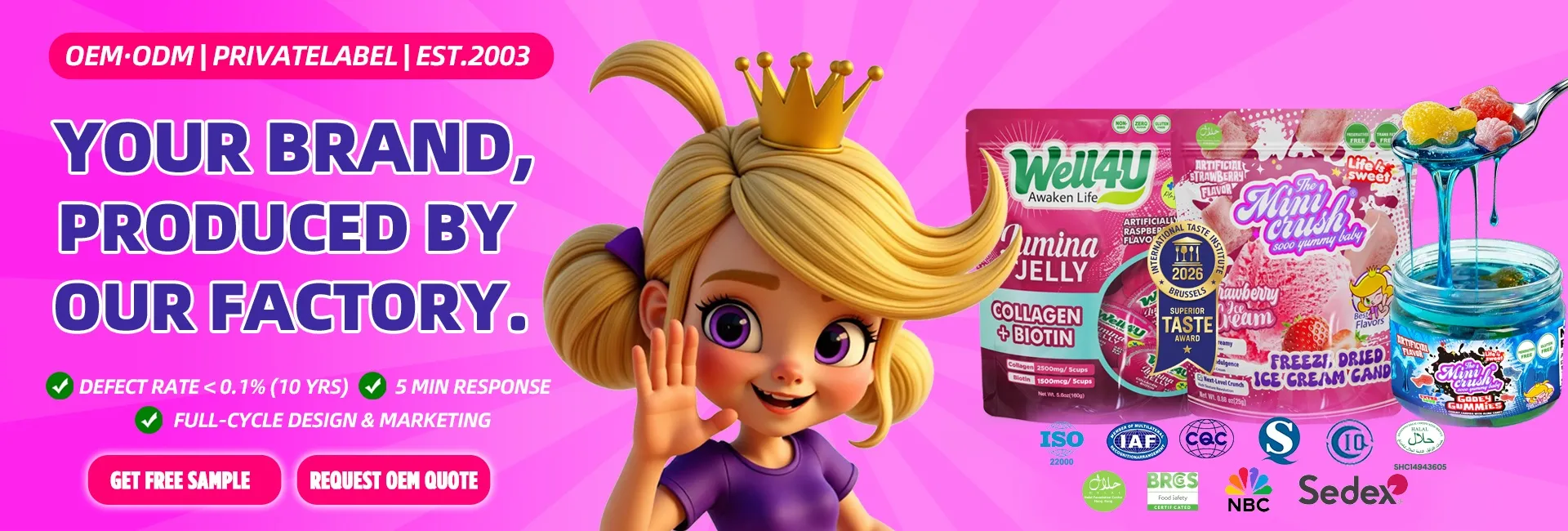


The global demand for functional snacks continues to grow as consumers seek products that combine enjoyable taste with nutritional benefits. Among these emerging categories, collagen jelly has become one of the fastest-growing products in beauty nutrition, healthy snacking, and private-label food markets.
Unlike conventional jelly desserts, collagen jelly requires precise formulation, ingredient compatibility, and strict manufacturing controls to ensure consistent texture, nutritional stability, and attractive appearance. Every stage-from raw material selection to packaging-directly affects product quality and consumer satisfaction.
For international brands, distributors, and retailers, understanding how collagen jelly is manufactured is essential when selecting an OEM production partner.
As an experienced jelly manufacturer, LITAFOOD provides customized OEM and ODM collagen jelly solutions for global customers, helping brands develop innovative products that meet local regulations and market expectations.

Why Manufacturing Matters
Many consumers assume collagen jelly is simply fruit jelly with collagen added. In reality, producing a stable functional jelly requires significantly more technical expertise than ordinary confectionery.
Manufacturers must carefully balance:
- Gel strength
- Water activity
- Sweetener systems
- Acidity
- Functional ingredient compatibility
- Shelf stability
- Packaging performance
Even small adjustments can influence texture, flavor release, product appearance, and shelf life.
This is why experienced OEM manufacturers invest heavily in formulation development and quality control.
Step 1: Selecting High-Quality Ingredients
The production process begins with ingredient selection.
Collagen Peptides
Manufacturers typically source premium collagen peptides that dissolve quickly and maintain good sensory performance.
Depending on customer requirements, collagen may come from:
- Marine sources
- Bovine sources
- Specialized collagen blends
Different markets have different preferences and certification requirements.
Gelling Agents
The gel system determines the final texture.
Common options include:
- Gelatin
- Pectin
- Carrageenan
- Konjac gum
Each provides a different mouthfeel and processing characteristic.
Sweeteners
Modern collagen jelly is available in numerous sweetness profiles.
Popular choices include:
- Cane sugar
- Glucose syrup
- Allulose
- Maltitol
- Erythritol
Many brands now develop reduced-sugar formulations to meet growing health-conscious demand.
Functional Ingredients
Additional ingredients may include:
- Vitamin C
- Hyaluronic Acid
- Dietary Fiber
- Biotin
- Zinc
- Botanical extracts
These ingredients help create differentiated products for beauty and wellness markets.
Step 2: Precision Mixing
Once ingredients have been approved, production enters the mixing stage.
Water is heated under controlled temperatures while sweeteners and stabilizers dissolve completely.
The gelling system is then activated to create a uniform base before collagen peptides and functional ingredients are introduced.
Accurate temperature control is critical because excessive heat may reduce the performance of sensitive ingredients.
Professional manufacturers continuously monitor:
- Temperature
- Mixing speed
- Viscosity
- Dissolution efficiency
This ensures consistent quality from batch to batch.

Step 3: Flavor Development
Flavor is one of the strongest purchasing factors for collagen jelly.
Successful products combine nutritional benefits with enjoyable taste.
Popular commercial flavors include:
- Peach
- Strawberry
- Mango
- Mixed Berry
- Grape
- Lychee
- Lemon
- Passion Fruit
OEM manufacturers also develop customized flavors tailored to regional consumer preferences.
Color selection is equally important, as visual appeal strongly influences purchasing decisions.
Step 4: Filling and Forming
After mixing, the jelly solution is transferred into filling equipment.
Common packaging formats include:
Individual Cups
Ideal for supermarkets and convenience stores.
Stick Packs
Designed for daily supplementation and travel.
Squeeze Pouches
Popular with younger consumers and online retail channels.
Family Multipacks
Suitable for warehouse clubs and retail promotions.
Automated filling equipment ensures accurate portion control while maintaining production efficiency.
Step 5: Cooling and Gel Formation
Once filled, products move through controlled cooling systems.
During cooling, the gelling network gradually develops, giving collagen jelly its signature smooth and elastic texture.
Cooling speed directly affects:
- Texture consistency
- Product appearance
- Surface smoothness
- Moisture distribution
Professional factories optimize cooling conditions to achieve uniform quality across every production batch.

Step 6: Quality Inspection
Quality assurance is integrated throughout the production process.
Inspection typically includes:
- Appearance evaluation
- Texture consistency
- Weight verification
- Seal integrity
- Microbiological testing
- Packaging inspection
- Shelf-life validation
Every production lot should meet established food safety standards before shipment.
Food Safety Standards
Global buyers increasingly prioritize food safety when selecting manufacturing partners.
Professional jelly manufacturers commonly operate under internationally recognized systems such as:
- HACCP
- ISO 22000
- BRCGS
- FDA registration (where applicable)
- Halal certification
- Kosher certification
Compliance requirements vary depending on destination markets.
Packaging Options for Private Label Brands
Packaging has become an important branding tool.
Popular private-label options include:
| Packaging Type | Suitable Channel |
|---|---|
| Stick Pack | Health & wellness retail |
| Cup Jelly | Supermarkets |
| Squeeze Pouch | Convenience stores |
| Gift Box | Seasonal promotions |
| Multi-Pack | Warehouse clubs |
| Display Carton | Retail distribution |
Customized packaging can include:
Brand logos
Nutrition labels
QR codes
Multilingual printing
Promotional graphics
Why More Brands Choose OEM Manufacturing
Developing an in-house production facility requires substantial investment.
OEM manufacturing offers several advantages:
- Lower capital investment
- Faster product launch
- Professional R&D support
- Flexible production volumes
- Customized formulations
- International export experience
- Scalable manufacturing capacity
For many international brands, partnering with an experienced OEM jelly manufacturer is the most efficient route to market.
Market Trends Driving Demand
Several global trends continue to support collagen jelly growth:
- Growing interest in functional foods
- Increasing beauty-from-within products
- Expansion of healthy snack categories
- Rising demand for convenient nutrition
- Strong growth in private-label food products
Consumers increasingly expect snacks to deliver both enjoyment and added value, making collagen jelly an attractive long-term category.

Frequently Asked Questions
What is collagen jelly made of?
Collagen jelly typically contains collagen peptides, water, sweeteners, gelling agents, fruit flavors, acids, and optional functional ingredients such as vitamins or dietary fiber.
Can collagen jelly be customized?
Yes. OEM manufacturers can customize formulas, flavors, sweetness, active ingredients, packaging, and branding.
Is collagen jelly suitable for export?
Yes. When produced by an experienced manufacturer, collagen jelly can be developed to comply with destination-market regulations and labeling requirements.
What packaging is most popular?
Stick packs, cups, squeeze pouches, and multipack gift boxes remain the most popular commercial formats.
Why choose an OEM jelly manufacturer?
OEM manufacturers provide formulation expertise, efficient production, customized packaging, and international export support, helping brands launch products more quickly and cost-effectively.
Collagen jelly combines enjoyable taste with functional nutrition, making it one of the fastest-growing categories in today's global confectionery and wellness markets. Behind every successful product is a carefully controlled manufacturing process involving ingredient selection, precision formulation, quality assurance, and reliable packaging.
For importers, distributors, wholesalers, and private-label brands, partnering with an experienced jelly manufacturer ensures product consistency, regulatory compliance, and efficient market entry.
LITAFOOD specializes in OEM and ODM jelly manufacturing, offering customized collagen jelly solutions tailored to global retail, health food, and private-label markets. With advanced production capabilities, flexible packaging options, and comprehensive export experience, we help customers transform innovative product ideas into successful commercial launches.


