


A New Era of Transparency in Food Labeling
The U.S. Food and Drug Administration (FDA) has proposed a groundbreaking regulation that could fundamentally reshape how consumers interact with packaged foods.
The draft rule mandates that food packaging must display a front-of-pack information box highlighting three critical nutrients - saturated fat, sodium, and added sugar - classified as "Low / Medium / High" based on their percentage of daily value (%DV).
This move signals a major step toward simplifying nutritional transparency, enabling shoppers to make health-conscious decisions at a glance without digging into the back-panel nutrition facts.
Why These Three "Health Killers"?
The FDA's choice to spotlight saturated fat, sodium, and added sugar was deliberate.
Saturated Fat: Overconsumption contributes to obesity and cardiovascular disease.
Sodium: Excess intake is a leading factor in hypertension and stroke.
Added Sugar: Strongly associated with obesity, type 2 diabetes, and metabolic disorders.
These three nutrients are not only scientifically recognized as major public health concerns, but also well understood by consumers, making them the logical focus for front-of-pack clarity.
Implications for the Food Industry
For major food corporations, this is more than a labeling change - it is a call for reformulation. Products prominently marked as "High" in sugar or sodium risk alienating health-conscious buyers.
Beverage giants like Coca-Cola and PepsiCo have been preemptively reducing added sugars by adopting sweeteners such as stevia and allulose.
Snack leaders like Mondelēz and Mars are rebalancing portfolios with low-sugar cookies, functional gummies, and fiber-enriched chocolates to prepare for stricter labeling.
A New Playing Field for Smaller Brands
Ironically, while large companies must overhaul legacy products, smaller and emerging brands may find opportunity in the disruption. By embracing better-for-you positioning from the outset, startups can leverage the front-of-pack rules as a competitive equalizer.
Contract manufacturers and private label partners are becoming crucial enablers, helping new brands launch compliant, low-sugar products swiftly into retail channels.
MiniCrush: A Strategic B2B Ally
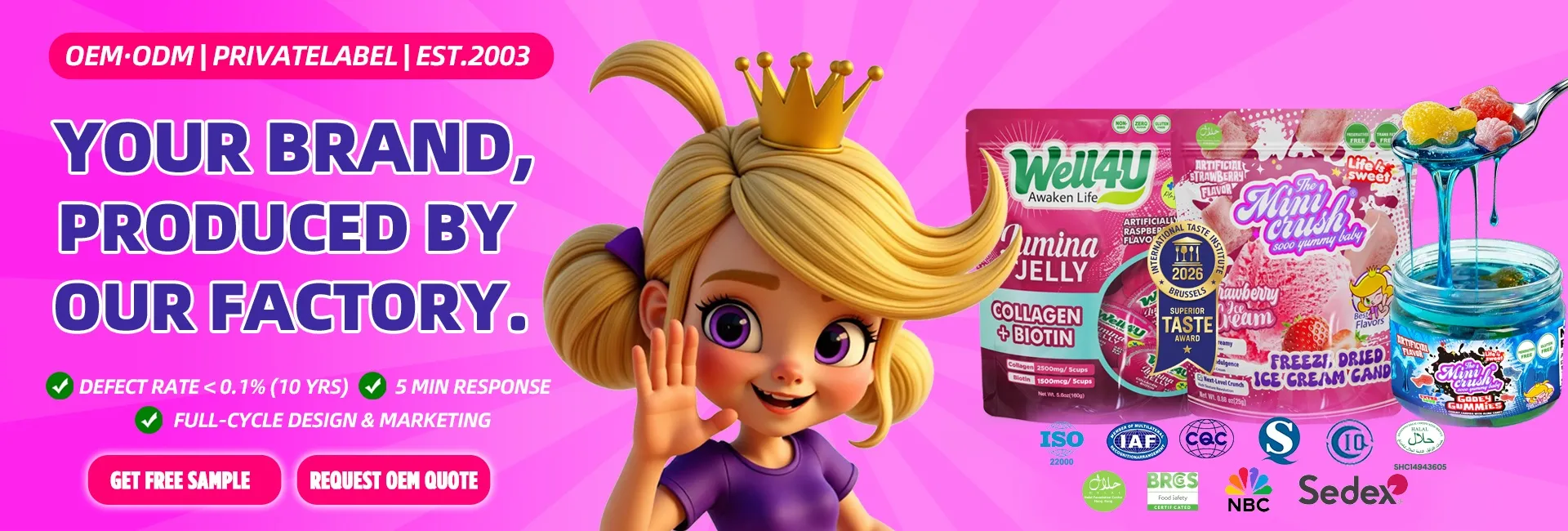
For Chinese confectionery innovator MiniCrush, the proposed regulation is less a challenge than a validation of its business model.
Private Label Solutions: MiniCrush designs customized low-sugar formulas for overseas retailers, ensuring products qualify for "Low in Added Sugar" classifications.
Contract Manufacturing: Export-ready production lines allow partners to rapidly scale compliant hard candies, gummies, and chews.
Global Compliance: MiniCrush adheres to FDA, EFSA, and halal standards, reducing barriers for international distribution.
Functional Innovation: By combining prebiotic fibers, vitamins, and plant extracts with sugar reduction, MiniCrush delivers not just compliance, but also a health premium.
Expert View: Regulation as Innovation Catalyst
Policy experts believe the FDA's proposal could be the most influential food labeling reform in two decades, forcing a shift from marketing-driven differentiation to formula-driven innovation.
For global supply partners like MiniCrush, this is a rare synchronized starting line with multinational corporations, giving nimble B2B manufacturers a chance to lead in the next wave of health-oriented confectionery.
Conclusion
As the FDA sharpens its focus on transparency, the food industry faces a binary future: adapt or lose shelf space.
MiniCrush is positioning itself as the partner of choice for brands navigating this regulatory shift:
"We help clients deliver candies that taste indulgent but wear a 'Low Sugar' badge proudly on the front of the pack."
The new rules may be a compliance challenge - but they are also the dawn of a global better-for-you candy movement.


