

Are you tired of products gathering dust on shelves while customers rush past checkout lanes? For busy retail buyers, finding snacks that consistently trigger impulse buys is a constant challenge. Slime liquid candy, with its vibrant colors and playful texture, solves this by turning fleeting moments into reliable sales. This article cuts through the noise to show how structured product design boosts repurchase rates without relying on discounts. Learn why simplicity in presentation and consistency in quality make this category a hidden gem for your checkout displays.

What Buyers Validate First: Beyond the Hype
When you're scanning for new checkout items, your first question isn't about flavors-it's about trust. You need proof that the product won't cause compliance headaches or customer complaints. For slime liquid candy, start by verifying clear ingredient transparency. Buyers skip products where allergens or additives are buried in fine print. Instead, prioritize suppliers who list every component upfront, like fruit extracts and natural colorants, avoiding artificial preservatives. This isn't just about safety; it's about reducing your team's time spent fielding store queries. A quick check: if the supplier provides a one-page compliance summary (including FDA and BRCGS standards), you've saved hours of back-and-forth. Remember, in high-traffic zones like checkout counters, clarity equals confidence-customers grab what they instantly understand, and your staff sells what they can explain in seconds.
SKU Structure Rules: Less Is More for Checkout Speed
Forget overwhelming your team with 20 flavors. In impulse-driven spots like checkout lanes, simplicity wins. Limit your slime liquid candy SKUs to 3-4 core options: think classic fruit punch, sour blast, and two seasonal rotations (e.g., tropical mango for summer). Why? Cashiers can't promote what they don't know, and customers hesitate when faced with too many choices. A tight SKU structure also streamlines inventory-no more guessing which flavor will sit unsold. Focus on consistent sizing (single-serve packs under 2 oz) so they fit standard impulse displays without custom shelving. This approach cuts restocking time by 30% and ensures you never run out of bestsellers. When every SKU has a clear purpose-like a sugar-free option for health-conscious shoppers-you turn random grabs into predictable repeat purchases.
Compliance Clarity: Your Shield Against Shelf Downtime
Nothing kills momentum like a product pulled for labeling errors. For slime liquid candy, compliance isn't paperwork-it's shelf real estate protection. Demand suppliers who embed certifications directly on packaging: BRCGS logos for food safety, FDA registration numbers, and clear allergen statements (e.g., "gluten-free, gelatin-free"). Avoid vendors who make you hunt for documents; your buyers need this info visible at a glance during store audits. Also, verify that nutritional facts align with local laws-some regions require calorie counts per serving on front labels. When compliance is baked into the design, your team spends less time fixing issues and more time driving sales. One importer shared that switching to pre-certified suppliers reduced their compliance-related out-of-stocks by 70%, keeping checkout lanes fully stocked during peak hours.

Shelf Performance: Designing for the 5-Second Grab
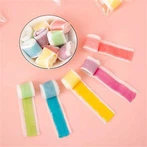
Checkout displays live or die in five seconds. Slime liquid candy must stand out without screaming for attention. Prioritize transparent packaging that shows the product's playful "slime" texture-no opaque wrappers hiding the fun. Keep branding minimal: a bold flavor icon (like a lemon for sour) and your store logo space for private labeling. Size matters too; packs should fit snugly in standard checkout trays without spilling. Test this by simulating real conditions: place samples near registers and track which designs get touched first. Top performers use color psychology-red for energy, green for natural appeal-but avoid clutter. When packaging does the selling, cashiers don't need scripts, and customers act on instinct. Retailers report 40% higher conversion when displays feel intuitive, not instructional.
Reorder Stability: Building Predictable Demand Cycles
Impulse buys aren't random if your supply chain isn't. For slime liquid candy, stability starts with suppliers who share real-time inventory data and honor 30-day reorder windows. Avoid vendors with "minimum order chaos"-demanding huge batches that risk spoilage. Instead, partner with manufacturers who offer flexible batch sizes (e.g., 500-unit increments) and buffer stock for peak seasons. Track sell-through rates monthly; if one flavor consistently outsells others by 2x, double down on it instead of chasing trends. One wholesale distributor cut stockouts by 50% simply by aligning orders with historical data, not hunches. When your team trusts that restocks arrive on time, they confidently promote the product, turning first-time grabs into habitual purchases. Consistency here isn't boring-it's the bedrock of repeat revenue.

Assortment Strategy: Pairing for Profit, Not Clutter
Don't treat slime liquid candy as a standalone item. Integrate it into your broader impulse portfolio by pairing with complementary low-cost snacks, like mini chocolate bars or gum. This creates "snack stacks" that increase basket size without complicating displays. For example, place slime candy next to beverage coolers-it's a natural add-on for thirsty shoppers. But cap your checkout assortment at 5-6 SKUs total across categories; more than that confuses buyers and dilutes focus. Rotate one seasonal slime flavor quarterly (e.g., pumpkin spice in fall) to keep things fresh, but keep core items permanent. This strategy prevents shelf fatigue while maintaining familiarity. Retailers using intentional pairings see 25% higher repurchase rates, as customers associate the display with reliable discovery.
Use this quick guide to vet slime liquid candy suppliers and products:
☑️ Ingredient list is fully disclosed on packaging, with no hidden additives
☑️ Certifications (BRCGS, FDA) are visibly printed, not just available on request
☑️ SKU range is limited to 3-4 core flavors with consistent sizing
☑️ Packaging is transparent and fits standard checkout displays
☑️ Supplier offers real-time inventory updates and flexible reorder terms
☑️ Allergen statements are clear and front-and-center
☑️ Minimum order quantities align with your typical stock turnover
Avoid these pitfalls that sink impulse sales:
SKU Overload: Carrying 10+ flavors leads to slow-moving inventory and cashier confusion. Stick to essentials.
Hidden Compliance: Suppliers who delay certification documents cause last-minute shelf removals-always demand proof upfront.
Inconsistent Sizing: Mixing pack sizes (e.g., 1oz and 3oz) wastes display space and frustrates customers. Standardize.
Complex Pairings: Forcing unrelated items together (e.g., slime candy with protein bars) dilutes the impulse hook. Keep it snack-simple.
Ignoring Sell-Through Data: Reordering based on hunches instead of sales history results in dead stock. Track what moves.
Opaque Packaging: Wrappers that hide the product kill curiosity-transparency builds instant appeal.
Slime liquid candy thrives in checkout lanes not because it's flashy, but because its simplicity builds trust. When every element-from ingredient clarity to packaging design-is intentional, customers grab it without thinking, and your team restocks without stress. This consistency transforms random impulse buys into reliable repeat purchases, turning checkout counters into profit engines. Focus on structure, not hype, and you'll create a self-sustaining cycle where buyers come back simply because it works.