


Over the past decade, a notable change in the global beverage market has been the increasing proportion of low-sugar and sugar-free products. Rising health awareness and global sugar tax policies have made sweetener innovation a new battleground for beverage giants. As industry leaders, Coca-Cola and PepsiCo have both extensively incorporated the natural sweetener stevia into beverage formulations, achieving a balanced taste without sacrificing flavor while also providing a valuable path for formula upgrades across the entire food and beverage industry.
Stevia Application Cases by Giants: From Trial to Comprehensive Strategy
As early as 2013, Coca-Cola launched "Coca-Cola Life," a stevia-containing beverage, aiming to partially replace sucrose with the natural sweetener while maintaining flavor and reducing calorie intake. Although the initial product received a mixed market response, it provided valuable experience for subsequent iterations. In recent years, Coca-Cola has launched stevia-based low-sugar teas, functional waters, and juice drinks in multiple markets, continuously improving the purity and formulation of stevia to achieve a sweetness closer to that of sucrose.
PepsiCo has also been actively developing its stevia strategy. Its "Pepsi Zero Sugar" line and some sports drinks incorporate new-generation stevia extracts such as Reb M and Reb D to reduce bitter aftertaste and enhance sweetness. Furthermore, PepsiCo has established long-term strategic partnerships with stevia suppliers to ensure a stable supply across various global markets.
These initiatives not only demonstrate the strength of these companies' R&D investments but also demonstrate that natural sweeteners have moved from experimental additions to mainstream formulations.
Market Trends: Low Sugar Becomes the New Normal in Global Food and Beverage Products
The global trend toward healthy eating is rapidly infiltrating consumer decision-making. According to a report by Euromonitor, an international market research firm, the global low-sugar or sugar-free food and beverage market is projected to reach US$150 billion by 2027, with a compound annual growth rate exceeding 6%. At the same time, over 130 countries and regions have implemented or plan to implement sugar taxes, fundamentally driving companies to adjust their formulas.
Consumers' dual demand for both "naturalness" and "health" has also led to increasing acceptance of stevia as an alternative sugar. Compared to artificial sweeteners, stevia's plant-based origin and low-calorie advantages make it a powerful tool for companies to cultivate a healthy brand image.
Implications for the Snack Industry: Low Sugar is No Longer Exclusive to Beverages
The application experience of stevia extends beyond beverages. In the snack industry, particularly in high-sugar categories such as candy, chocolate, and biscuits, stevia also offers potential for formulation optimization.
In the past, reducing sugar in snack recipes often faced two major challenges: loss of taste and flavor, and production process adaptation issues. The beverage giant's accumulated expertise in stevia ratio control, flavor blending, and raw material stability provides snack manufacturers with a proven path to follow. For example, by combining stevia with sugar alcohols like erythritol, not only can bitterness be reduced, but the texture can also be improved, and shelf life can be extended.
MiniCrush's Exploration into Low-Sugar Freeze-Dried Candies
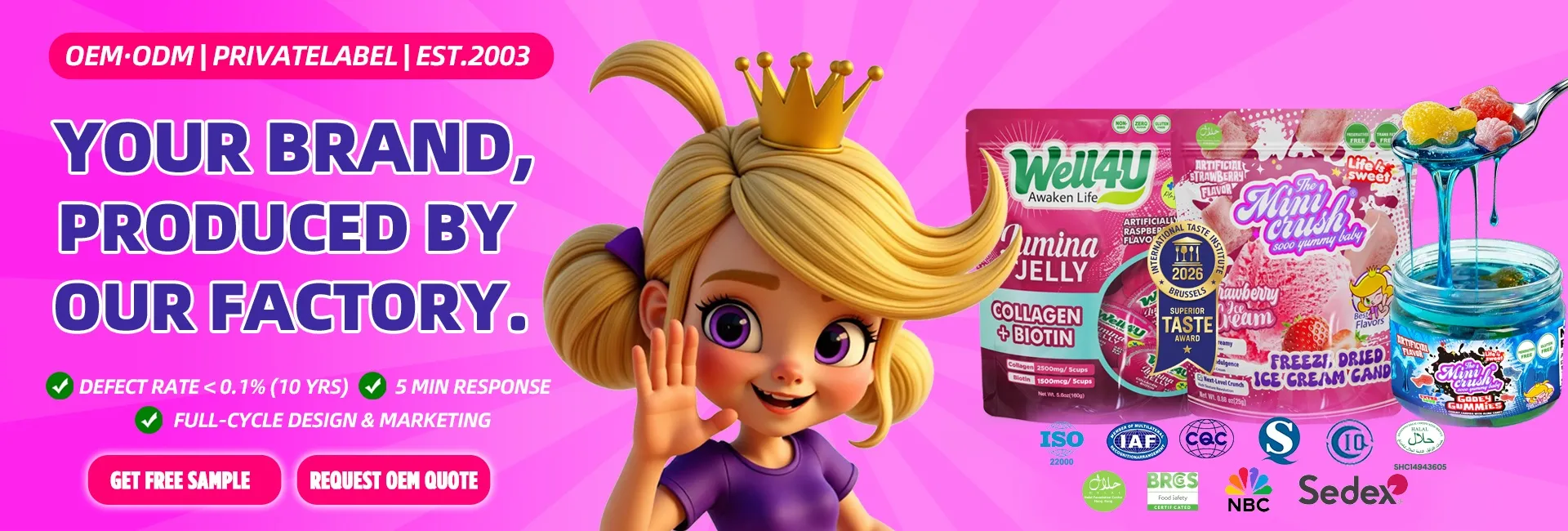
As a freeze-dried candy company with over 20 years of experience in freeze-drying technology, MiniCrush has accumulated extensive experience in process innovation and international market expansion. Future advancements in formulas, incorporating natural sweeteners like stevia, will be a key breakthrough for MiniCrush in the healthy snack market.
Freeze-drying technology offers the advantage of preserving original flavor and nutritional value, while low-sugar formulas can further expand the product's consumer base, particularly among young consumers focused on sugar control, fitness enthusiasts, and those seeking diabetes-friendly products. By incorporating stevia into products like freeze-dried candies and freeze-dried ice cream, MiniCrush can reduce sugar content by 30% to 50% without sacrificing flavor. These products also meet export standards through international certifications such as BRC and HACCP.
B-end Market Opportunities: Healthy Formulas Become a Differentiating Competitive Point
For overseas distributors, retail chains, and food brands, low-sugar freeze-dried candies will become a differentiated and attractive product.
With rising demand for healthy snacks in Europe, the US, and the Middle East, freeze-dried products using stevia can help distributors capture a significant share of the healthy snack shelf space. MiniCrush's capabilities in supply chain traceability, mass customization, and packaging diversity also enable B-side clients to quickly launch their low-sugar lines.
Conclusion: From Beverage Giant to Snack Star
Coca-Cola and PepsiCo's stevia strategies demonstrate how giants can consolidate their market position through formula revolution. They also signal that the use of natural sweeteners will transcend category boundaries and fully penetrate every segment of the food industry.
For MiniCrush, this is not only an opportunity for technological innovation but also a passport to global health snacking. In the future competition, whoever can first achieve the dual balance of low-sugar formulations and flavor experience will secure long-term growth in the international market.


