
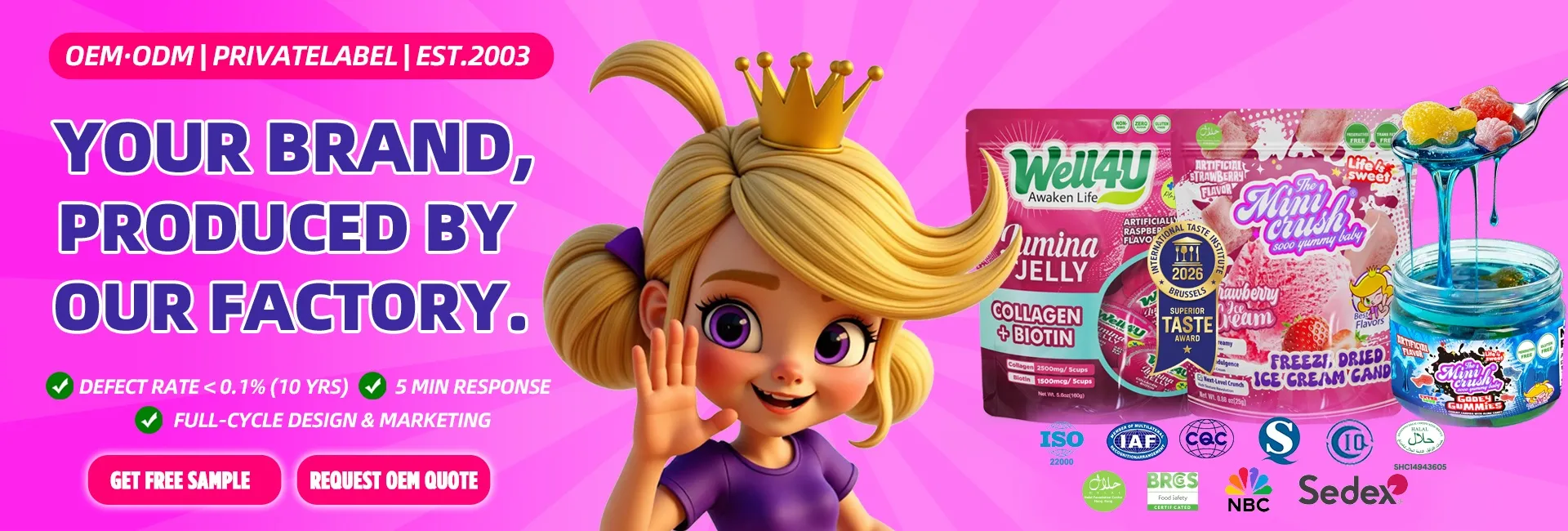


Buyers face a constant challenge: creating gummy salad assortments that drive impulse stress-snacking without drowning in unsold tail inventory. Too often, novelty clashes with practicality, leading to wasted shelf space and lost profits. This article cuts through the noise, focusing on simple, actionable strategies for building assortments that sell consistently. We'll show you how to align emotional appeal with smart inventory control-so your orders stay fresh, profitable, and easy to reorder.

What Buyers Validate First: Certifications as Your Safety Net
When evaluating gummy salad, skip the flashy packaging and start with compliance. Buyers know that gaps in certifications can halt shipments, trigger recalls, or damage retailer relationships. For gummy salad-a product often linked to stress-relief moments-safety isn't optional. Look for suppliers with full international certifications like ISO22000, HACCP, BRC, and FSMA-FSVP. These aren't just stamps on paper; they're proof the product meets global supermarket standards (think Costco or Disney audits). Why does this matter? Because a single compliance hiccup can turn a hot-selling stress-snacking item into a liability. Verify these upfront: request the audit reports, check expiration dates, and confirm they cover all ingredients. This step ensures your product won't get stuck in customs or rejected on store shelves, protecting your margins from day one.
SKU Structure Rules: Keep It Simple, Not Sticky
Complex SKU structures are the silent killers of gummy salad profits. Buyers often overcomplicate assortments with too many flavors or sizes, hoping to capture every niche. But in stress-snacking, simplicity wins. Stick to 3–5 core SKUs per category-like classic fruit, sour bursts, or vegan options-to avoid fragmentation. For example, limit your gummy salad line to bite-sized pouches (for grab-and-go stress relief) and shareable trays (for social moments). Each SKU should have a clear purpose: no "just in case" variations. Test this rule: if a SKU hasn't sold 80% of its stock in 90 days, cut it. Why? Because tail inventory ties up cash and eats into shelf space for better performers. A clean SKU structure also speeds up reorders-you'll know exactly what's moving and what's not, without drowning in data.
Assortment Strategy: Mix Novelty Without the Inventory Hangover
Here's where gummy salad shines for stress-snacking: it taps into emotional moments like post-work unwind or quick mood boosts. But novelty must serve the strategy, not sabotage it. Buyers succeed when they rotate limited-edition flavors (e.g., "calm lavender" or "energy citrus") alongside evergreen staples like strawberry-banana. The trick? Tie new launches to seasonal stress peaks-back-to-school or holiday seasons-and cap production at 20% of total volume. This keeps things fresh without overstocking. Crucially, use supplier data on past sell-through rates to predict demand. If your vegan gummy salad sold out fast last quarter, scale it up; if the spicy mango flopped, drop it. Avoid "assortment sprawl" by ensuring every new item complements, not competes with, your core range. This approach turns emotional cravings into reliable sales, not clearance bins.
Shelf Performance: Design for Impulse, Not Just Display
Gummy salad isn't bought-it's grabbed. On shelves, it must stand out in under three seconds to hook stress-snacking buyers. Forget fancy endcaps; focus on visibility and ease of access. Place single-serve pouches at eye level near checkout lanes, where impulse decisions happen. Use bright, consistent branding (like MiniCrush's recognizable colors) so shoppers spot it instantly during tense moments. But performance isn't just about looks-it's about flow. Track turnover rates: if a flavor sits too long, it's a sign the assortment's off-balance. For stress-snacking items, aim for 4–6 week shelf life max; anything slower risks stale inventory. Partner with suppliers who provide real-time sales data-this lets you adjust orders before slow-movers become dead stock. Remember, a well-placed gummy salad isn't just candy; it's a mood-lifter that pays for itself in quick sales.

Reorder Stability: Build Trust Through Predictable Supply
Nothing kills repeat orders like inconsistent supply. Buyers need gummy salad that arrives on time, every time-especially for stress-snacking cycles where demand spikes are predictable (like Mondays or paydays). Prioritize suppliers with 15+ years of export experience and proven capacity across 50+ markets. They'll handle volume swings without quality drops. Also, check their production safety protocols; GMP standards and CSR commitments mean fewer disruptions from labor issues or recalls. For reorders, insist on clear lead times and buffer stock options. If a supplier can't guarantee 95%+ on-time delivery, walk away. Why? Because reliability turns first-time buys into long-term partnerships. When your shelves never go empty, retailers trust you-and that trust fuels bigger, more frequent orders.

Buyer Checklist
Use this quick guide to evaluate any gummy salad product:
1. **Compliance Check**: Confirm all certifications (ISO22000, HACCP, BRC) are current and cover full ingredients.
2. **SKU Simplicity**: Ensure ≤5 core SKUs per category; no "test" items without sales data.
3. **Novelty Balance**: Verify new flavors are capped at 20% of volume and tied to seasonal stress peaks.
4. **Shelf Readiness**: Demand single-serve options with ≤6 week shelf life for impulse zones.
5. **Supply Proof**: Require 12+ months of on-time delivery records and export experience.
Avoid these pitfalls that sink gummy salad profits:
- **SKU Overload**: Carrying 10+ flavors dilutes focus; stick to winners that clear shelves fast.
- **Ignoring Emotional Triggers**: Generic assortments miss stress-snacking moments-e.g., no "calm-down" options for evening retail.
- **Vague Compliance**: Assuming certifications are "good enough" without checking audit dates.
- **Reactive Reordering**: Waiting for stockouts instead of using sales data to pre-empt demand.
- **Complex Packaging**: Multi-flavor trays that confuse buyers; keep it simple for quick grabs.
Gummy salad thrives when it's designed for real human moments-not just inventory spreadsheets. By keeping assortments lean, compliance rock-solid, and novelty purposeful, you turn stress-snacking into a repeatable profit engine. Structure isn't restrictive; it's what lets buyers sleep easy knowing their orders will sell, ship, and satisfy without surprise costs. That's how you build partnerships where reorders feel effortless, not risky.


