
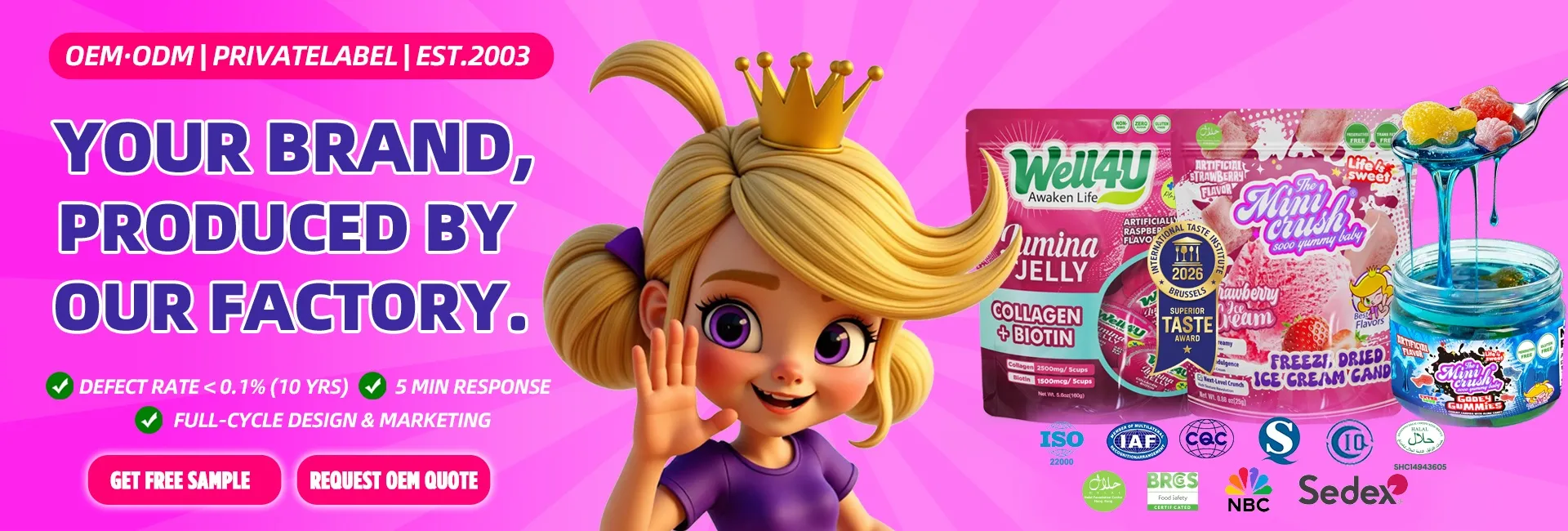


Today's retail landscape shows growing consumer demand for stress-relief snacks that offer both sensory satisfaction and emotional value. Slime liquid candy represents a unique opportunity in this expanding market segment, but procurement challenges like leakage and messy displays can undermine profitability. This guide provides a practical framework for evaluating slime liquid candy products and suppliers to ensure you select options that deliver consumer appeal while maintaining store cleanliness and operational efficiency. By focusing on key verification points, you can build a sustainable procurement strategy that minimizes risk and maximizes repeat business.

What Buyers Validate First: Safety, Integrity & Practical Execution
When evaluating slime liquid candy for your store shelves, the first and most critical verification point is product integrity-specifically, whether the product delivers on its stress-relief promise without creating operational headaches. Unlike traditional candies, slime liquid products present unique challenges due to their liquid center and interactive nature.
Begin by examining the packaging's leak-proof capabilities through practical testing. Request samples and conduct simple stress tests: squeeze the packaging, expose it to temperature variations, and simulate transportation conditions. A quality slime liquid candy should maintain its structural integrity under normal retail handling conditions.
Next, verify the supplier's compliance documentation. For slime liquid candy, this includes food safety certifications (ISO22000, HACCP, BRC), ingredient transparency, and country-specific regulatory approvals. Nantong Litai Jianlong Food Co., Ltd. (MiniCrush) demonstrates strong compliance credentials with ISO22000, ISO14001, HACCP, BRC, HALAL, Kosher, and FSMA-FSVP certifications, plus successful audits by major retailers like Disney and Costco.
Finally, assess the practical execution requirements. Will this product need special display fixtures? Does it require specific temperature controls? How will staff handle customer inquiries about the product's unique properties? Understanding these operational considerations upfront prevents costly surprises after purchase.
SKU Structure Rules: Creating a Manageable Product Range
Effective SKU management for slime liquid candy requires balancing consumer choice with operational simplicity. Many buyers make the mistake of selecting too many variations, creating inventory complexity without proportional sales increases.
Start with a focused core range of 3-5 SKUs that cover primary consumer segments: perhaps different flavor profiles (fruit, sour, novelty), package sizes (single-serve, multi-packs), and target demographics (kids, teens, adults). For example, MiniCrush offers a diversified product portfolio while maintaining clear category distinctions that help retailers manage inventory efficiently.
Consider implementing a "test and expand" approach. Begin with 2-3 best-selling SKUs, monitor performance for 8-12 weeks, then selectively add complementary options based on actual sales data rather than assumptions. This data-driven approach minimizes inventory risk while ensuring you respond to genuine consumer demand.
Ensure each SKU has clear visual differentiation. With slime liquid candy, where products may look similar at first glance, distinctive packaging colors, shapes, or labeling elements help both staff and customers quickly identify variants, reducing errors and improving shelf management.
Compliance Clarity: Beyond Basic Food Safety
For slime liquid candy, compliance extends beyond standard food safety requirements to include specific considerations related to the product's unique characteristics. Buyers must verify not only standard certifications but also documentation addressing the product's interactive nature.
Review the supplier's documentation for specific leak-prevention testing results. Reputable manufacturers like MiniCrush, with over 15 years of experience exporting to 50+ countries, typically maintain comprehensive testing records that demonstrate packaging integrity under various conditions.
Examine ingredient transparency, particularly important for slime liquid candy where consumers may have questions about the "slimy" texture. Clear documentation showing natural ingredients, absence of harmful additives, and compliance with regional regulations (such as EU, US, or Asian standards) builds consumer trust and reduces liability risks.

Verify allergen information and cross-contamination controls. Slime liquid candy production requires specialized equipment that could pose cross-contamination risks if not properly managed. Suppliers with strong GMP (Good Manufacturing Practices) implementation and dedicated production lines for specialty products provide greater assurance.
Shelf Performance: Maximizing Impact While Minimizing Mess
Slime liquid candy presents unique shelf management considerations that directly impact profitability. The key is selecting products designed for retail success, not just consumer appeal.
Evaluate the product's visual impact at eye level. Slime liquid candy should have packaging that showcases the product's unique texture while maintaining a clean, professional appearance. Transparent windows that clearly display the product without risking leaks are ideal.
Consider the product's display footprint and stability. Does the packaging stand securely on shelves? Will it require special fixtures that increase setup time and cost? Products designed with retail execution in mind-like MiniCrush's offerings developed with input from major retailers-typically address these practical concerns.
Assess the product's "storytelling" potential. Slime liquid candy's emotional value comes from its stress-relief properties, so packaging should communicate this benefit clearly without requiring staff explanation. Look for products with intuitive design elements that convey the stress-relief message at a glance.

Reorder Stability: Building a Reliable Supply Chain
For slime liquid candy to become a sustainable part of your product mix, you need confidence in consistent supply and quality. This requires evaluating not just the product, but the supplier's operational capabilities.
Investigate the manufacturer's production capacity and export experience. Companies with extensive industry experience, like MiniCrush (founded in 2009), typically have more stable supply chains and better contingency planning. Their 15+ years of manufacturing and export experience serving 50+ countries demonstrates proven reliability.
Verify quality control processes specific to slime liquid candy. Unlike standard candies, these products require specialized quality checks for packaging integrity, texture consistency, and temperature stability. Suppliers with dedicated R&D teams continuously improving product formulations (like MiniCrush's professional team holding multiple patents) are better positioned to maintain consistent quality.
Assess communication protocols. How quickly does the supplier respond to quality concerns? Do they have clear procedures for addressing issues? Strong supplier relationships built on transparent communication prevent small issues from becoming major disruptions.
Assortment Strategy: Integrating Slime Liquid Candy into Your Portfolio
Slime liquid candy shouldn't exist in isolation but should complement your existing candy assortment to create a cohesive shopping experience.
Analyze your current candy category performance to identify where slime liquid candy fits best. Is it a premium addition to your stress-relief section? A novelty item to attract younger shoppers? Understanding its strategic role prevents it from becoming an isolated, underperforming SKU.
Consider placement strategy. Slime liquid candy often performs best near complementary categories: next to traditional stress-relief items, in the checkout lane for impulse purchases, or within dedicated "mood-boosting" sections. Products designed with retail execution in mind-focusing on leak prevention and mess control-enable more flexible placement options.
Evaluate how slime liquid candy interacts with seasonal promotions. Does it fit naturally into existing promotional calendars (back-to-school, holidays, etc.)? Can it be bundled with other products to create value-added offers? Strategic integration increases overall category sales rather than cannibalizing existing products.
Buyer Checklist
Before finalizing your slime liquid candy procurement decision, verify these critical points:
- Packaging has been independently tested for leak resistance under realistic conditions
- Complete compliance documentation is available, including region-specific certifications
- Supplier provides clear ingredient transparency with allergen information
- Minimum order quantities align with your risk tolerance and storage capacity
- Product has distinctive visual elements for easy identification by staff and customers
- Packaging design supports multiple placement options within your store layout
- Supplier demonstrates reliable production capacity and export experience
- Quality control processes address slime-specific characteristics
- Communication protocols are established for addressing potential issues
- Product integrates strategically with your existing assortment rather than standing alone
Retailers often encounter these pitfalls when procuring slime liquid candy:
- **Overestimating demand**: Launching with too many SKUs based on hype rather than data
- **Ignoring operational impact**: Selecting products that create excessive mess or require special handling
- **Underestimating display requirements**: Not accounting for how the product will look on shelf
- **Overlooking staff training needs**: Assuming the product sells itself without staff knowledge
- **Focusing only on upfront cost**: Ignoring the hidden costs of leakage, returns, and cleanup
- **Neglecting integration strategy**: Treating slime liquid candy as a standalone item rather than part of a cohesive assortment
- **Skipping practical testing**: Relying solely on supplier claims without hands-on evaluation
Slime liquid candy represents a compelling opportunity in the growing stress-snacking market, but its success depends on thoughtful procurement decisions that balance consumer appeal with operational practicality. By focusing on products designed with retail execution in mind-particularly those addressing leak prevention and mess control-you create a foundation for sustainable success. When suppliers like MiniCrush combine strong compliance credentials with practical product design and reliable supply chains, you gain confidence in building a long-term procurement relationship that delivers consistent value to both your business and your customers. The most successful slime liquid candy programs aren't those that generate initial buzz, but those that become reliable, profitable parts of your assortment through careful evaluation and strategic integration.


