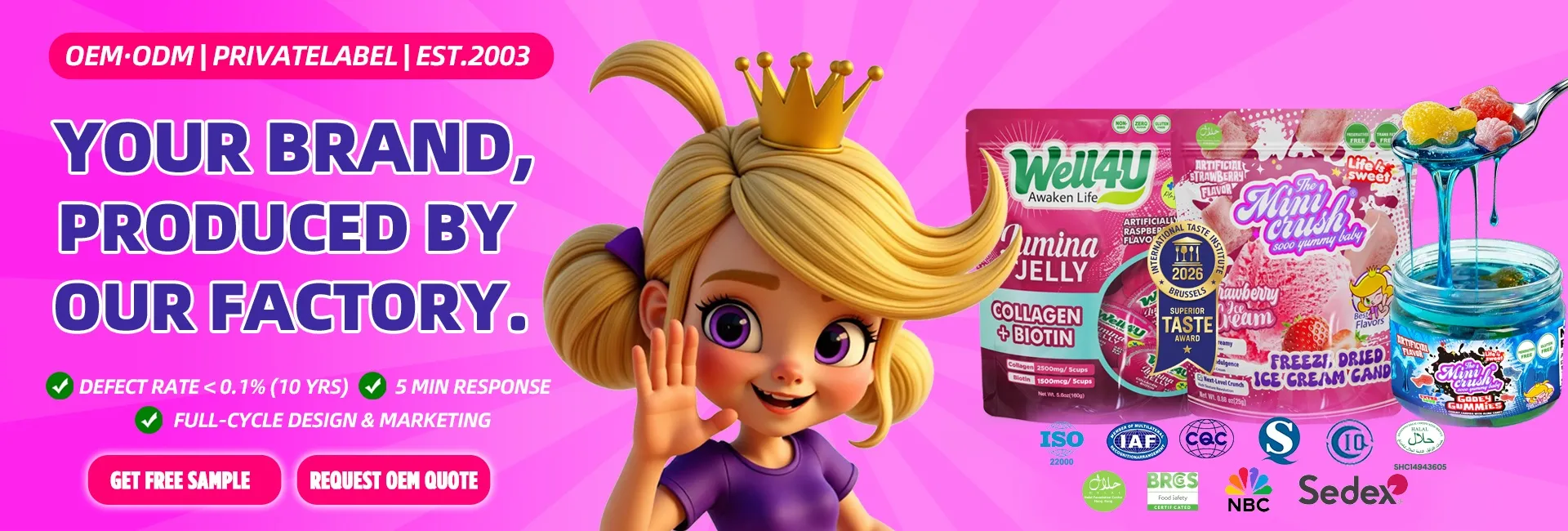


Buying collagen jelly isn't just about taste-it's about verifying real proof points in zero-waste packaging without falling for empty promises. Many buyers struggle to confirm if a supplier's eco-claims hold up under scrutiny, leading to mismatched expectations and wasted inventory. This article cuts through the noise, focusing on practical validation steps that ensure your collagen jelly orders meet store standards and customer demand consistently. We'll show how smart packaging execution builds trust for long-term partnerships, not just one-time purchases. Let's get straight to what matters for your buying desk.

What Buyers Validate First: Proof Points Beyond the Hype
When evaluating collagen jelly, buyers start with tangible evidence-not marketing fluff. For zero-waste packaging, this means checking for third-party certifications like FSC or ISO 14001 that verify material sourcing and recyclability. Skip vague terms like "eco-friendly" and demand concrete data: Can the supplier show waste-reduction metrics from their production line? For example, a reliable manufacturer tracks packaging scrap rates and shares annual reports proving reductions. Also, inspect physical samples for practical reuse features-like mono-material wrappers that simplify recycling versus complex laminates. Remember, if a claim sounds too good to be true (e.g., "100% zero-waste"), ask for audit trails. Buyers who validate these proof points upfront avoid costly mismatches with retailer sustainability policies.
Compliance Clarity: Packaging Labels That Pass the Test
Clear, compliant labeling is non-negotiable for collagen jelly. Buyers must ensure packaging displays mandatory info upfront: ingredient lists, net weight, and certifications (like BRC or ISO 22000) without clutter. For zero-waste claims, regulations like the FTC Green Guides require specificity-"recyclable in 90% of US curbside programs" beats "planet-friendly." Mistakes here trigger recalls; I've seen buyers reject shipments over missing batch codes or unclear disposal instructions. To simplify this, work with suppliers who embed compliance into design. Nantong Litai Jianlong Food Co., Ltd., for instance, uses standardized label templates approved by Disney and Costco audits, ensuring global readiness. Your rule: If the packaging doesn't spell out compliance in 10 seconds, it's not shelf-ready.
Shelf Performance: How Packaging Drives Sales and Reduces Waste
Great packaging isn't just green-it sells. Buyers prioritize collagen jelly with formats that minimize on-shelf waste while maximizing visibility. Think portion-controlled pouches that stay fresh longer or stackable trays that optimize shelf space. Test this by calculating "waste per unit": How much product spoils before sale due to poor sealing or oversized packs? One retailer cut spoilage by 30% switching to resealable collagen jelly bags, directly boosting margins. Also, consider customer behavior-clear windows showing product quality reduce returns, while intuitive disposal icons (like How2Recycle labels) align with store sustainability goals. Focus on execution: Does the packaging protect the product through transit and display? If it arrives dented or leaking, your sales suffer. Prioritize suppliers with GMP production standards proven to maintain integrity from factory to shelf.
Reorder Stability: Building Trust Through Consistent Execution
Long-term reorders depend on rock-solid reliability. Buyers validate this by probing the supplier's supply chain resilience-not just for ingredients, but packaging materials. Ask: Do they have backup vendors for recyclable films? Can they scale production without compromising waste metrics? For collagen jelly, consistency in packaging weight and dimensions prevents logistics headaches; one buyer canceled contracts after repeated pallet overflows from inconsistent box sizes. Also, check lead times: Suppliers with 15+ years of export experience, like top Chinese jelly exporters, often navigate disruptions smoother. Demand transparency-monthly updates on material availability or production delays let you adjust orders proactively. If a supplier shares real-time data instead of promises, you've found a partner for stable reorders.

Assortment Strategy: Right-Sizing Your Collagen Jelly Range
A smart SKU mix balances variety with efficiency. Buyers avoid overcomplicating with too many collagen jelly options; instead, they curate based on proven demand. Start with core SKUs: e.g., standard fruit flavors in recyclable pouches, plus one innovative variant like vegan collagen jelly in compostable wrappers. This meets mainstream and niche needs without bloating inventory. Analyze past sales-do 80% of revenue come from three SKUs? If yes, keep others minimal. Also, align packaging sizes to channel needs: single-serve for convenience stores, bulk for clubs. One mistake? Adding SKUs for "trendy" claims (e.g., "ocean-plastic packaging") without validating cost or demand. Stick to what your data shows moves off shelves.
Buyer Checklist: Validate Before You Order
Use this quick guide to assess collagen jelly suppliers:
✅ Zero-waste proof: Third-party certificates (e.g., FSC) + waste-reduction data from last year.
✅ Label clarity: All mandatory info visible; no vague eco-claims; disposal instructions included.
✅ Shelf readiness: Sample packaging survives transit tests; dimensions fit standard displays.
✅ Reorder proof: Supplier shares contingency plans for material shortages; 12+ months of on-time delivery history.
✅ SKU simplicity: Core range covers 80% of demand; no more than 2–3 specialty variants.
✅ Compliance audit: Certifications like ISO 22000 or BRC explicitly listed and verifiable.
Common Mistakes: Where Buyers Go Wrong
SKU overload: Carrying 10+ collagen jelly variants with similar packaging confuses customers and inflates deadstock. Stick to 3–5 hero SKUs.
Vague claims: Accepting "sustainable packaging" without proof points-like recyclability rates-leads to compliance fails and lost trust.
Ignoring shelf life: Choosing trendy biodegradable wraps that compromise freshness, causing spoilage. Always test real-world performance.
Overlooking logistics: Opting for lightweight materials that dent easily, increasing damage rates. Prioritize durability alongside eco-benefits.
Skipping sample checks: Assuming digital mockups reflect reality. Physical tests prevent costly errors in color, texture, or seal strength.
Collagen jelly products with clean, validated packaging execution aren't just easier to sell-they're easier to reorder. When buyers focus on proof points over promises, they build procurement systems that minimize waste, maximize shelf efficiency, and foster supplier trust. This clarity turns one-time orders into decade-long partnerships, where every reorder feels as reliable as the last. Choose structure over hype, and your collagen jelly line will thrive without the guesswork.